What CCS Classification Really Covers on Dredging Equipment
A CCS classification certificate on a dredger certifies that the hull, machinery, electrical installation, automation arrangements and the specific notations printed on the document meet the CCS rules applied at build and at survey, within the class character and operating limits named on that same document. It does not certify dredging output, hopper productivity, wear life, fuel consumption, warranty or delivery terms. Reading the notation string correctly is therefore the difference between a certificate that protects a project and one that only looks reassuring.
This guide is written for procurement and project teams at the decision-to-execution stage: the certificate has been promised or attached to a tender pack, and someone now has to confirm what the vessel is actually cleared to do. It uses the class facts carried by the Yanyang Marine fleet as working examples, because a fleet with several different class arrangements shows the real problem better than an abstract definition.
Zhenjiang Yanyang Engineering Co., Ltd. (Yanyang Marine), based in Zhenjiang, China, is a manufacturer and exporter of dredgers and dredging vessels founded in 1996, with 30+ large dredger construction projects delivered. Its range covers cutter suction dredgers, trailing suction hopper dredgers, split hopper barges, grab dredgers, backhoe dredgers and pile driving barges.
What a CCS certificate actually is
A class certificate is a scope document. It states which parts of a vessel were assessed, under which class character, against which rules, for which service limits, and with which additional notations attached. The short line that procurement teams usually read first, something like 'CCS, CSA Trailing Suction Dredger, Dredging within R1, DP-1', is not a single status label. It is a compressed list of separate decisions, and each of those decisions opens one operating door while leaving another closed.
When the certificate is compared with the project, three separate questions have to be answered: is the class character the right one for this vessel type, do the service and operational notations match our working area and working method, and is the survey status current at handover. A certificate that answers the first question well can still fail the second.
Problem definition: three ways a class certificate gets misread
1. Treating class as a performance guarantee
Class confirms rule compliance for the surveyed systems. It does not confirm how many cubic metres the dredger will move per hour on a specific seabed, how long a pump casing will last in abrasive sand, or whether the discharge distance is adequate for the reclamation plan. Those are engineering and site questions that sit outside the class scope, and mixing them into the certificate conversation creates commitments no class society has made.
2. Reading the class character and skipping the notations
A 'CCS classed dredger' and a 'CCS classed dredger with a defined dredging area, an entry-level dynamic positioning notation and a light-ice hull notation' are different assets. The first phrase survives in a quotation. The second determines where the vessel can be deployed and which tender requirements it can satisfy.
3. Assuming notations transfer between vessels, fleets and societies
Notations belong to a specific vessel, a specific class society and a specific rule edition. A notation earned by one unit in a fleet does not automatically apply to a sister unit, and a notation written by one society does not automatically match a differently worded requirement from another. Verification is document-by-document.
Industry background: why dredgers carry more notations than their tonnage suggests
A dredger is a work vessel, not a cargo ship, and its class scope reflects that. Alongside hull strength, watertight integrity and stability, the class assessment covers machinery, shafting and piping, the electrical installation, and the automation arrangements that determine how the machinery space is watched. On top of that come the notations that reflect the work itself: the class character that identifies the dredger type, a service-area notation that fixes where dredging is classed to take place, positioning notations for station-keeping, and hull notations for ice-strengthened service.
This accumulation is practical rather than decorative. Class status is typically part of what insurers, port authorities and project owners look for when a contractor mobilises, so the notation set effectively defines the pool of projects a vessel can be offered for. In commercial practice, notations are also a risk allocation tool: a client who requires a specific notation is transferring part of the operating risk to the class society's survey regime.
Conditional compliance is common in dredging. A vessel can be fully in class and still be restricted to a defined dredging area, a defined ice condition or a defined redundancy level. That is not a defect. It is the certificate doing its job, provided the buyer reads the restriction before the vessel is committed to a site.
What CCS classification covers, and what it does not
The table below is the working split used during due diligence. The exact scope always depends on the rule edition cited on the certificate and on the class character assigned, so it should be confirmed against the issuing society rather than assumed.
| Typically inside the class scope | Typically outside the class scope |
|---|---|
| Hull structure and watertight integrity, including hopper or pontoon body | Dredging output in cubic metres per hour under site-specific soil conditions |
| Machinery installation, piping systems, shafting and propulsors | Wear life of pumps, cutters, suction pipes and discharge lines |
| Electrical installation and control systems | Fuel consumption, operating cost per cubic metre, crew competence |
| Automation arrangements corresponding to the stated automation notation (for example AUT-0) | Delivery schedule, payment terms, warranty and commercial remedies |
| Class character identifying the dredger type, such as CSA Trailing Suction Dredger | Hopper volume treated as a productivity figure rather than a classed capacity |
| Service and operational notations: dredging area, ice class, dynamic positioning level | Suitability for a project that falls outside the notation limits |
| Survey status: period of validity, conditions of class, outstanding recommendations | Site logistics, mobilisation time and seabed conditions at the work face |
Reading a certificate in six steps
Notation by notation on a working dredging fleet
26,800 m³ TSHD: CSA Trailing Suction Dredger, Dredging within R1, DP-1
This is the most information-dense notation string in the fleet, and it is the one most likely to be read too quickly. The class character confirms the rules were applied to a trailing suction hopper dredger, a self-loading unit that fills its hopper through a suction pipe and discharges by bottom doors, splitting or pumping ashore. 'Dredging within R1' converts the certificate into an operating boundary: the dredging work is classed for the area defined under R1, so a project in a different area needs the notation extended rather than assumed. DP-1 adds a positioning capability at the entry redundancy level, which is useful for confined or current-affected work but is not equivalent to the redundancy levels often named in offshore specifications.
The combined reading is coherent: a very large hopper dredger classed for a defined dredging area with basic dynamic positioning. It fits channel, approach and reclamation work inside that area. It is not a licence for unrestricted offshore station-keeping, and it is not evidence of output per hour.
25 m³ grab dredger: ZC class and near-shore coastal navigation
The 25 m³ grab dredger is classed under ZC rather than CCS, and its operating profile is near-shore coastal navigation. For procurement, that single difference decides eligibility in a tender. A specification that requires CCS ocean-going class will not be satisfied by a ZC certificate, however capable the unit is on a near-shore site. Conversely, near-shore coastal maintenance, berth cleaning and debris or boulder removal do not require an ocean-going class notation to be executed competently.
The correct action is not to argue equivalence but to confirm scope: ask the issuing body which rules apply to the unit, which area the notation covers, and whether the certificate supports the specific coastal work being tendered. A grab dredger working inside its stated profile with a valid ZC certificate is a compliant asset; the same unit offered against a CCS ocean-going requirement is a documentation mismatch that will surface at audit.
2,600 m³ split hopper barge: CCS plus Ice Class B
The 2,600 m³ split hopper barge carries CCS class together with Ice Class B, and its certificate ZA23DNB00274 runs from 30 August 2024 to 29 August 2029. Two separate procurement values come out of that string. The CCS element establishes the classed status of a self-discharging hopper barge used for material transport and disposal. Ice Class B establishes hull strengthening for light ice conditions within the notation family, which extends the working season in ice-affected harbours and rivers.
Neither element should be stretched. Ice Class B supports operation in ice-affected water up to the conditions defined for that notation; it does not make the barge an icebreaker and it does not permit operation in conditions defined for higher ice classes. The barge's hopper volume, meanwhile, is a classed capacity figure, not a productivity promise.
EX5500 backhoe dredger: long-term offshore duty
A backhoe dredger is a pontoon-based unit, and its class scope covers the pontoon structure, machinery, electrical installation and the excavator installation as classed equipment, together with the positioning arrangement the unit relies on. Long-term offshore duty adds three questions that a certificate alone cannot close: whether the station-keeping method suits the offshore site and its metocean pattern, whether the survey cycle fits inside the deployment window without an unplanned yard visit, and whether spare parts and technical support are arranged for the whole duty period.
For a unit positioned by spuds, the most common offshore planning error is not the class notation at all but the mismatch between spud holding in the actual seabed and the production sequence assumed in the schedule. Class compliance answers the structural and machinery question; geotechnical suitability is a separate engineering judgement.
AUT-0 automation across the fleet
AUT-0 is an automation notation, and its operating meaning is attendance. It defines the arranged automation level and the assumption under which the machinery space can be operated without continuous manning. In a procurement model this feeds directly into crewing: a vessel classed for periodically unattended machinery operation can be staffed differently from one that is not, and over a multi-month deployment that difference is a recurring cost line, not a footnote.
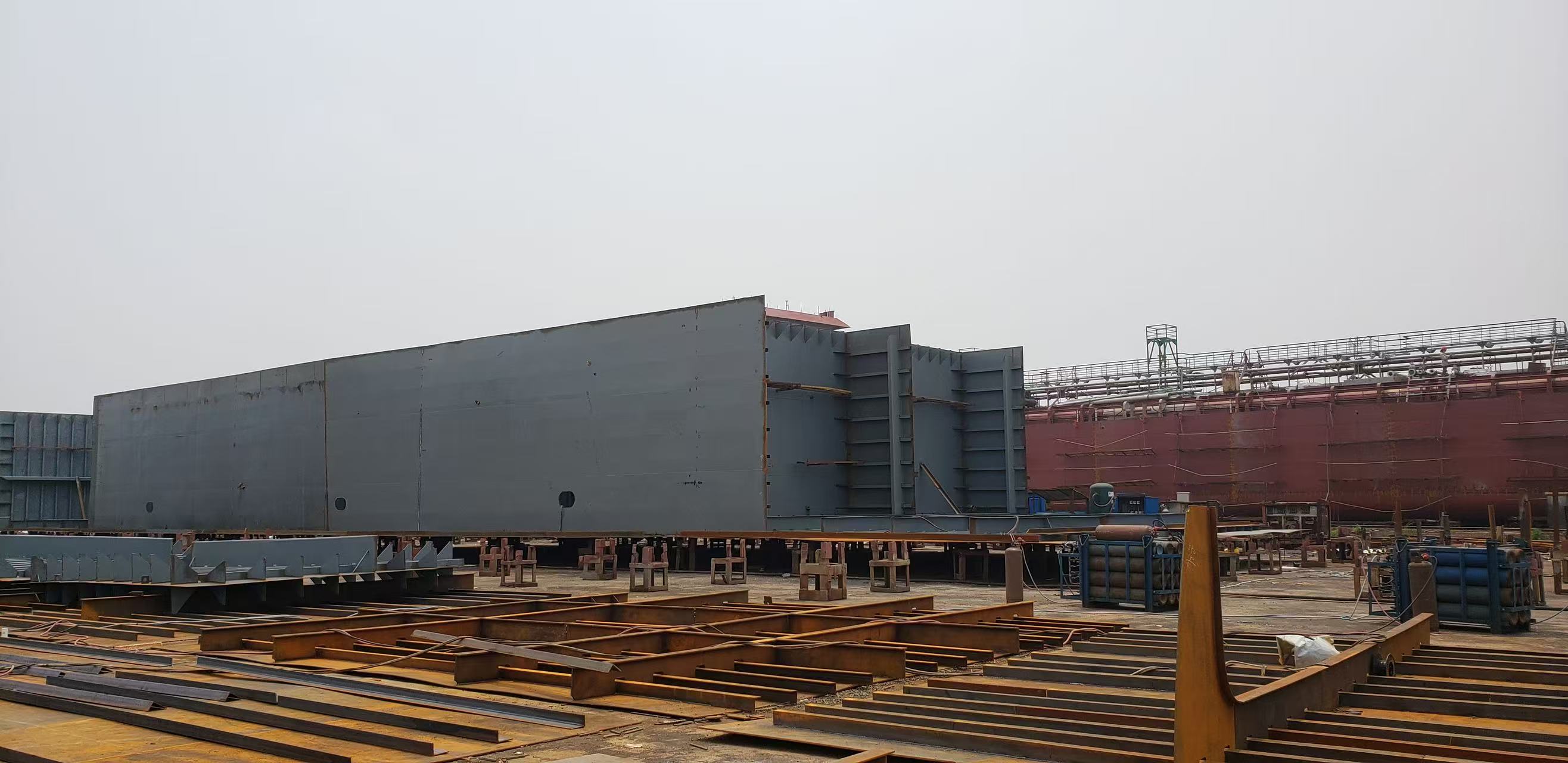
Notation-to-operation comparison
The table maps each class arrangement in the fleet to the operating profile it supports and to the points that still have to be verified by the buyer. It is a reading aid for the certificate review, not a substitute for the certificate itself.
| Unit | Class and notations | Operating profile the certificate supports | Still to verify before commitment |
|---|---|---|---|
| 26,800 m³ TSHD | CCS; CSA Trailing Suction Dredger; Dredging within R1; DP-1 | Large-volume trailing suction dredging inside the defined R1 dredging area, with dynamic positioning at the entry redundancy level | Soil conditions and output; discharge distance; actual project DP redundancy requirement; whether the site lies inside R1 |
| 25 m³ grab dredger | ZC class | Near-shore coastal navigation and grab dredging within that operating profile | Whether the tender requires CCS ocean-going class; confirmation of scope with the issuing body |
| 2,600 m³ split hopper barge | CCS; Ice Class B; certificate ZA23DNB00274, issued 30 August 2024, valid to 29 August 2029 | Hopper transport and self-discharge, including light-ice seasons as defined for the ice notation | Ice conditions in the actual working season; survey status and conditions of class at delivery |
| EX5500 backhoe dredger | Classed pontoon-based unit for long-term offshore duty | Pontoon-based excavation and precision dredging over extended offshore deployments | Station-keeping method against site conditions; survey plan and spares support across the deployment |
| Fleet automation | AUT-0 | Machinery space operated under the attendance assumption defined by the automation notation | Crewing and watchkeeping plan for the specific site and project duration |
Use cases: where a notation changes the commercial answer
Port construction and expansion
Port projects combine capital dredging, trench and berth work, and material disposal. A large TSHD classed for a defined dredging area and DP-1 positioning is normally proposed for the capital phase, while a split hopper barge handles transport and disposal. The notation check here is whether the dredging area covers the actual approach channel and basin, not just the port name on the drawing.
Channel and approach dredging
Channel work is repetitive, volume-heavy and schedule-critical, which makes output and survey continuity the dominant risks. Class compliance establishes the vessel's status; the buyer still has to confirm that the survey cycle will not interrupt the campaign and that conditions of class are clear at mobilisation.
Near-shore coastal maintenance
Smaller coastal and berth maintenance scopes are where a grab dredger with a ZC certificate and a near-shore coastal profile is genuinely efficient, particularly for debris and boulder removal where a suction dredger is the wrong tool. The eligibility question is documentary: check the tender for a required class notation before pricing.
Cold-region harbour work
Where the working season is compressed by ice, the ice notation on a split hopper barge extends the usable window. That commercial value is real but bounded: Ice Class B supports light-ice operation as defined for the notation, so a season that regularly presents heavier conditions needs a different class arrangement, not a more optimistic schedule.
Offshore wind and long offshore duty
Offshore scopes raise the redundancy question first. DP-1 is an entry-level notation, and specifications written around offshore construction often name higher redundancy levels; matching the notation to the specification at tender stage avoids a substitution argument later. For a backhoe dredger on long offshore duty, the deciding documents are the survey plan and the spares and support arrangement, not the notation line alone.
River desilting and inland work
Inland and river work is usually bounded by draft, access and mobilisation rather than by offshore notations. The relevant certificate check is the operating profile the unit is classed for and whether the river or lake system falls inside it.
Turning notations into contract language
The most reliable way to prevent a notation dispute is to move the notation from the marketing summary into the technical specification and the acceptance clause. The checklist below is the version that works in practice.
- Name the required class character explicitly, for example 'CSA Trailing Suction Dredger classed by CCS', rather than 'CCS classed'.
- List each required notation as a separate line item: dredging area, DP level, ice class, automation notation.
- Attach the certificate with the rule edition, certificate number, issue date and expiry date.
- Confirm the certificate directly with the issuing society, including current conditions of class and any outstanding recommendations.
- Require that survey status is current on the delivery date, not only on the quotation date.
- Tie acceptance to pre-delivery inspection and PODA signing, so the documented condition is agreed before title passes.
- Match the payment structure to the acceptance event: escrow deposit with final payment on delivery under PODA, direct deposit for minor transactions, or milestone instalments and letter of credit for selected newbuilding work.
- Confirm commercial basics in the same document: minimum order quantity of one unit or one vessel, and delivery terms FOB, CIF or vessel delivery at the agreed port.
- Attach a spare parts list keyed to the survey cycle, so the parts needed at the next survey are already identified.
Long-term ownership: class as a lifecycle obligation
For a buyer at the execution stage, the certificate's most under-used field is the expiry date. A certificate valid to 29 August 2029 is also a five-year survey schedule, and the cost of that schedule belongs in the ownership model from day one. Dredging equipment is typically kept in service for decades, so notation decisions taken at build — an ice class, a DP level, a dredging area — become structural constraints that are expensive to change later and cheap to specify early.
Three lifecycle actions follow from that. First, keep the certificate, conditions of class and survey reports in the asset file from delivery, because a notation that cannot be evidenced is a notation a charterer will not accept. Second, plan upgrades as class changes: raising a DP level, extending a dredging area or converting a unit for a new duty usually requires re-approval, and the yard that built the vessel is normally the shortest route to that approval. Third, treat wear-part supply as part of compliance continuity, since an unscheduled stop for a pump or pipe section can push a survey date and break a campaign schedule.
This is where a manufacturer with an operating service arm matters more than a broker with a certificate file. Yanyang Marine's after-sales services cover new building, maintenance, repair and conversions, and the company exports to markets including the Middle East, India, Russia, South America, Africa and Europe. In practice that means a single technical counterpart for the survey interval, the conversion decision and the spare parts order, rather than three separate suppliers who each hold a fragment of the vessel's history.
Delivery timing interacts with all of this. Standard vessels are quoted at 2 to 3 months and custom dredgers at 8 to 12 months, so the notation requirements have to be fixed before the build slot is booked. A notation added after contract signature is a change order; the same notation specified at enquiry is a line in the specification.
FAQ
Does a CCS certificate confirm a dredger's production output?
No. CCS classification confirms that the surveyed hull, machinery, electrical installation, automation arrangements and listed notations comply with the applicable class rules for the stated class character and service limits. Production output depends on soil conditions, pump configuration, discharge distance and operating method, and must be established separately through the technical specification and site data. A certificate should never be read as a capacity guarantee.
What is the difference between CCS class and ZC class on a dredger?
They are different classification arrangements, not interchangeable labels. The 25 m³ grab dredger in the Yanyang Marine fleet is ZC classed with a near-shore coastal navigation profile, while the 2,600 m³ split hopper barge and the 26,800 m³ TSHD carry CCS class with their own notations. A tender that specifies CCS ocean-going class will not be satisfied by a ZC certificate, so the scope of each arrangement should be confirmed with the issuing body and matched to the tender requirement before pricing.
Do additional notations increase cost and delivery time?
Notations change the scope of the survey, the equipment fitted and, in the case of automation and positioning notations, the crewing and operating model. They are therefore cost drivers rather than labels, and the practical effect is largest when they are added after the build specification is frozen. Because standard vessels are quoted at 2 to 3 months and custom dredgers at 8 to 12 months, specifying required notations such as dredging area, DP level or ice class at enquiry stage is the cheaper sequence.
How should a buyer verify a class certificate before signing?
Verify it against the issuing society, not against the seller's summary. Record the certificate number, issuing society, vessel or yard number, issue date and expiry date, then confirm current conditions of class and any outstanding recommendations. Certificate ZA23DNB00274, for example, is a CCS certificate issued on 30 August 2024 and valid until 29 August 2029 for a self-discharging hopper barge. Pair the document check with a pre-delivery inspection and PODA signing so that the certificate, the vessel and the acceptance record agree.
How do class notations affect long-term support and delivery?
Every notation adds a survey obligation, so the certificate's validity window is also the maintenance and survey calendar for the asset. Buyers should confirm that new building, maintenance, repair and conversion support is available for that calendar, and that spare parts are planned around survey dates rather than around failures. To review the notations that fit a specific project and request the certificate package with the current survey status, contact Yanyang Marine at Info@yanyangmarine.com or +86 159-5290-0547 with the working area, duty profile and required notation level.
Conclusion
A CCS certificate is precise when it is read precisely. It tells you which dredger type was classed, which rules were applied, where the vessel is classed to dredge, what redundancy level its positioning system was approved for, what automation and attendance assumption apply, and how long the whole arrangement remains valid. It does not tell you what the vessel will produce, what it will cost to run, or whether it suits a site the notation excludes.
The working method is short. Take the notation string apart, write one sentence per notation describing what it authorises and what it excludes, match both sentences to the project, and put the required notation in the technical specification rather than the marketing annex. On a fleet like Yanyang Marine's, where CSA Trailing Suction Dredger with Dredging within R1 and DP-1, ZC class with a near-shore coastal profile, CCS with Ice Class B under certificate ZA23DNB00274, long-term offshore duty classing and AUT-0 automation all appear together, that method turns a single line of text into an operational boundary map — which is exactly what a decision-stage procurement team needs.
Request the certificate package for your project
Send the working area, dredging depth, duty profile and required notations, and Yanyang Marine will return the matching class documentation, specification sheet and current survey status for the units under consideration.
Email: Info@yanyangmarine.com | Tel / WhatsApp: +86 159-5290-0547 | www.yanyangmarine.com
Office: 1# Rainbow Building, Jiangbin Road, Zhenjiang City, Jiangsu Province, China
Have Questions or Need More Details?
Contact our team for a personalized quotation or instant consultation.
Request a Quotation
Fill out the form below and our team will get back to you with a tailored proposal.
WhatsApp Direct Chat
Prefer to chat in real-time? Message us on WhatsApp for instant assistance & quick answers.
- Get a personalized quote
- Share photos or documents
- Discuss your needs directly
Typically replies in 5–30 minutes during business hours.