Dredging Equipment Comparison: How to Choose Between CSD, TSHD, Grab and Backhoe Dredgers
Choosing the right dredging equipment is a high-stakes procurement decision. The four most commonly compared dredger types are the Cutter Suction Dredger (CSD), Trailing Suction Hopper Dredger (TSHD), Grab Dredger, and Backhoe Dredger. Each works best under different conditions, so the correct choice depends on project scale, soil type, dredging depth, disposal distance, and whether you need the vessel to transport material by itself. This guide explains the key trade-offs, compares European and Chinese manufacturing options, and provides a practical selection framework for port construction, channel dredging, coastal maintenance, inland river desilting, and offshore wind projects.
Why Dredging Equipment Selection Matters
Dredging equipment is not a commodity. A trailing suction hopper dredger can cost over a hundred million dollars, and a poor match between vessel type and project conditions can lead to months of delay, higher fuel consumption, and repeated mobilisation costs. The global dredging equipment market was valued at approximately USD 4.86 billion in 2023 and is projected to reach USD 7.36 billion by 2030, which indicates how much capital is moving through this sector. Within that market, hydraulic dredgers — including cutter suction dredgers — held the largest revenue share at about 46.65% in 2023, while trailing suction hopper dredgers are estimated to account for around 46.0% of total dredging market activity by 2026. These figures confirm that CSDs and TSHDs dominate the industry, but grab and backhoe dredgers remain essential for depth-limited or precision work.
From a buyer perspective, the decision is not simply “mechanical vs. hydraulic.” It is a matching exercise: define the work first, then select the vessel class, then choose a supplier who can deliver it within your budget and schedule.
Understanding the Main Dredger Types
Cutter Suction Dredger (CSD)
A Cutter Suction Dredger uses a rotating cutter head to loosen soil at the seabed or riverbed while a suction pipe removes the material through a discharge pipeline. It is efficient for hard soil, clay, and rock dredging and provides a relatively high discharge distance. CSDs are widely used for port construction, river desilting, land reclamation, and channel deepening. Their main limitation is that they are not self-propelled over long distances and they normally require a pipeline or barge system to transport the dredged material. If the discharge distance is long, booster pumps may be needed.
Trailing Suction Hopper Dredger (TSHD)
A Trailing Suction Hopper Dredger is a self-propelled vessel that trails suction pipes along the seabed while sailing, and stores the dredged material in its own hopper. This design gives it strong self-loading capability and makes it ideal for large-scale offshore and channel dredging, port maintenance, offshore sand extraction, and land reclamation. TSHDs are usually the best option when the project requires the vessel to travel to a disposal site or when operations take place in exposed offshore conditions. They are generally more expensive to build and operate than CSDs, which is why they dominate large capital projects rather than small inland operations.
Grab Dredger
A Grab Dredger uses a clamshell grab suspended from a crane or gantry to excavate material from the seabed. It is suitable for deep-water dredging and for removing boulders or debris, because the grab can reach depths that may be difficult for a cutter suction system. Grab dredgers are often used for maintenance dredging in harbours, marine debris removal, and work near structures where precision matters. However, they work in a cyclic stop-and-lift motion, which is generally slower than continuous hydraulic dredging in soft soils.
Backhoe Dredger
A Backhoe Dredger is essentially an excavator mounted on a barge or pontoon. It is strong in excavating stiff materials and is well suited to precision dredging in confined areas such as berths, quay walls, and shallow harbours. The backhoe can handle compacted material and debris better than a suction dredger, but the barge must be moved frequently, and the Excavator's reach limits the effective working depth. It is therefore best regarded as a precision and heavy-material tool rather than a high-volume production dredger.
Dredging Equipment Comparison by Decision Criteria
When evaluating equipment for a specific project, buyers should compare the following criteria: production rate, soil type, dredging depth, transport/disposal method, mobilisation cost, fuel consumption, and purchase cost. The table below presents a neutral comparison of the four main dredger types based on generally accepted operational characteristics.
| Criteria | Cutter Suction Dredger (CSD) | Trailing Suction Hopper Dredger (TSHD) | Grab Dredger | Backhoe Dredger |
|---|---|---|---|---|
| Best Soil Type | Hard soil, clay, sand, soft rock | Silt, sand, clay; less suited to hard rock | Boulders, debris, sand, soft material | Stiff clay, compacted material, debris, soft rock |
| Typical Application | Port construction, channel dredging, river desilting, land reclamation | Large-scale offshore and channel dredging, port maintenance, offshore sand extraction | Deep-water dredging, maintenance near structures, debris removal | Precision dredging in confined areas, berth and quay work |
| Method of Material Transport | Discharge pipeline; may require booster pumps | Self-loading hopper; vessel transports material | Requires separate hopper barge or dump barge | Requires separate hopper barge or dump barge |
| Production Continuity | High (continuous excavation and pumping) | High (continuous while sailing and pumping) | Lower (cyclic grab-and-lift) | Moderate (cyclic excavation and swing) |
| Working Depth | Generally limited by ladder and pump design | Deep, limited by suction pipe length | Very deep, limited by crane/winch capability | Limited by excavator reach on the barge |
| Precision in Confined Areas | Moderate | Lower, needs sea room to manoeuvre | High | Very high |
| Relative Purchase Cost | Medium to high | High | Low to medium | Medium |
This comparison is intentionally operational. A CSD is the most common choice when the project has a long pipeline route and the soil can be hydraulically pumped. A TSHD becomes necessary when the disposal site is offshore and the vessel must navigate under its own power. Grab and backhoe dredgers become attractive when the material is too coarse, the area is too confined, or the depth is too great for a cutter suction system.
Application-Based Selection: Port, Channel, Inland, Coastal and Offshore
Port Construction and Berth Deepening
Port projects usually require a combination of dredgers: a large TSHD for approach channels, a CSD for reclamation and berth excavation, and possibly a backhoe dredger for precision work around quay walls. The selection depends on the project's phasing. If the port has an existing breakwater, a backhoe dredger may work efficiently in the protected basin. If the approach channel is exposed, a TSHD is usually safer and more productive.
Channel Dredging and Maintenance
Channel maintenance is often dominated by TSHDs because the vessel can sail to the spoil ground and discharge while returning. However, for narrow inland waterways, a CSD with a floating pipeline may be more practical, provided the pipeline route is acceptable. Many inland river desilting projects use cutter suction dredgers because the material can be pumped directly to a designated settling area.
Coastal Maintenance and Land Reclamation
Land reclamation demands large volumes of sand and often uses TSHDs for offshore sand extraction and discharge into reclamation areas. CSDs are commonly used to move material from borrow pits to a reclamation site via pipeline. Coastal maintenance also includes beach nourishment, where a TSHD is often the only practical option because it can pump directly ashore.
Offshore Wind Support
Offshore wind is an emerging demand driver for specialized dredging and marine construction equipment. Seabed preparation, cable trenching, and foundation levelling rely on support vessels such as split hopper barges and floating cranes. For wind farm sites, a split hopper barge can transport dredged material or rock, while a floating crane handles heavy lifting. If an oil and gas or renewable operator needs a multi-purpose vessel, custom-built offshore equipment is often required.
River Desilting and Inland Projects
Inland river desilting in India, Indonesia, Egypt, and other markets frequently uses smaller hydraulic dredging equipment. A compact CSD can operate in narrow rivers and pump silt directly to low-lying disposal areas. Because inland projects are cost-sensitive, medium-size custom-built dredgers with lower operating costs are often preferred over large European vessels.
Comparison: Chinese Manufacturers vs European Dredger Suppliers
Once the dredger type is defined, the next decision is supplier selection. The global market is dominated by established European names: Royal IHC, Damen Shipyards Group, Jan De Nul Group, and Boskalis are widely identified as top-tier manufacturers and contractors in this sector. European suppliers bring long engineering heritage, advanced automation, and project-construction experience. However, they also carry a high price tag and, in practice, a long delivery schedule.
Chinese manufacturers now compete on a different value proposition: lower initial investment, faster delivery, and the ability to build vessels to IACS classification standards. Zhenjiang Yanyang Engineering Co., Ltd. (Yanyang Marine), founded in 1996 in Zhenjiang, China, specialises in the design, construction, and export of dredgers and offshore vessels. The company has delivered more than 30 large dredger construction projects and has a dedicated engineering team. Its vessels can be built to IACS class societies such as CCS, BV, LR, or DNV as required. According to Yanyang, its products offer approximately 50% lower cost than European brands while maintaining quality, with delivery of standard vessels in 2–3 months compared with much longer European lead times; custom-built dredgers typically take 8–12 months. For a buyer, the practical implication is: European suppliers may be appropriate for ultra-complex bespoke vessels with strict owner specifications. Chinese suppliers offer faster access to a working asset for standard vessel classes and for custom designs where the buyer provides clear performance parameters.
Cost and Budget Considerations
Initial purchase price is only one part of the financial picture. Buyers should calculate the total cost of ownership over a 10- to 15-year vessel life, including financing cost, fuel consumption, crew wages, maintenance, insurance, and downtime. A cheaper vessel that suffers frequent failures is not a good investment. Conversely, a premium vessel that sits idle because the project does not require its full capability is also a poor decision.
From a supplier comparison standpoint, the largest and most consistent cost gap is in the initial CAPEX and delivery timeline. A standard stock TSHD or CSD from a Chinese yard can be delivered in 2–3 months, which means the vessel can begin earning revenue almost immediately. European yards commonly require 2–3 years for a newbuild, and the first few years of the project must therefore be spent waiting for the vessel. For many contractors, that gap alone justifies choosing a Chinese supplier, even if the long-term residual value of the European vessel is higher.
Step-by-Step Selection Framework
A reliable procurement path for dredging equipment involves the following six steps.
- Define the operational profile. Estimate annual production volume, average dredging depth and discharge distance, required operating days, and the main soil types. These parameters will rule out certain dredger types immediately.
- Determine the transport and disposal method. Check whether the disposal site is reachable by pipeline, by self-propelled hopper, or only by barge. This step decides whether a CSD or a TSHD is structurally suitable.
- Set compliance and certification requirements. Determine which flag state and class society will be required; typical choices include CCS, BV, LR, DNV. Confirm that the supplier can build to those rules and provide documentation accepted by your project insurer.
- Shortlist suppliers by dredger type and size. Compare suppliers that have verifiable experience in the same vessel class and project scale. Request references and ask to inspect a completed or in-progress hull.
- Evaluate total cost and delivery risk. Compare initial price, delivery schedule, commissioning support, spare parts availability, and the cost of a one-year delay in revenue.
- Negotiate a contract with clear acceptance tests. Include sea trials, performance guarantees (production rate, fuel consumption, dredging depth), and a documented spare parts and after-sales plan.
Understanding Classification and Quality Signals
Classification is one of the strongest objective quality signals in dredging equipment procurement. Vessels built under the supervision of an IACS member class society undergo design review and periodical survey during construction. A hull classed by CCS, BV, LR, DNV, or another recognised society therefore carries documentation that is accepted by insurers, ports, and charterers. ISO 8384:2019 also supports the industrial vocabulary for dredger specifications, which helps buyers communicate their requirements in precise terms. While classification does not guarantee that the vessel is well suited to a particular project, it confirms that the design and construction followed defined technical rules — an important baseline when comparing suppliers from different countries.
New-Build vs Used Dredging Equipment
Some projects start with used dredging equipment because the initial CAPEX is lower. However, used vessels carry hidden risks: unknown hull condition, outdated machinery, higher fuel consumption, and limited availability of spare parts. A used TSHD may still cost tens of millions of dollars, and an expensive dry-docking survey can erase the initial saving. New-build dredgers from a custom-capable yard allow the buyer to specify dredging depth, discharge distance, power, hopper volume, and classification from the start. In contrast, a used vessel forces the buyer to adapt the project to the existing asset. If the delivery schedule permits 8–12 months for a custom build, that is usually a lower-risk procurement route for mission-critical projects.
Case-Oriented Supplier Considerations
Because site photos can be misleading without context, buyers should evaluate suppliers on verifiable facts rather than images. For a Chinese manufacturer like Yanyang Marine, the relevant evidence includes: more than 30 large dredger construction projects delivered since 1996; 100% export ratio to markets such as the UAE, Indonesia, India, Egypt, Turkey, Nigeria, South Africa, Tanzania, Saudi Arabia, and Oman; and the ability to provide IACS class. Internally, the company reports a team of around 50 employees including a 10-person R&D/engineering group. While those figures are modest compared with European yards, they correspond to a flexible mid-size builder that can provide one-stop services from design drafting and construction supervision to vessel shipment and crew training. The practical question is not whether the manufacturer is as large as Royal IHC or Damen; it is whether the manufacturer has built similar vessels, can class them as required, and can meet the project schedule.
Risk Management in Dredging Equipment Procurement
A common buyer concern is equipment malfunction after delivery. The best response is preventive maintenance: engine and pump systems should follow scheduled inspection and testing procedures from day one. The photographs below show two examples of equipment inspection and commissioning. In one series, Dutch engineers perform equipment inspection on a dredger; in another, personnel are seen during booster pump station commissioning on a dredging project. Regular inspection by qualified engineers is the single most effective measure for avoiding unplanned downtime.
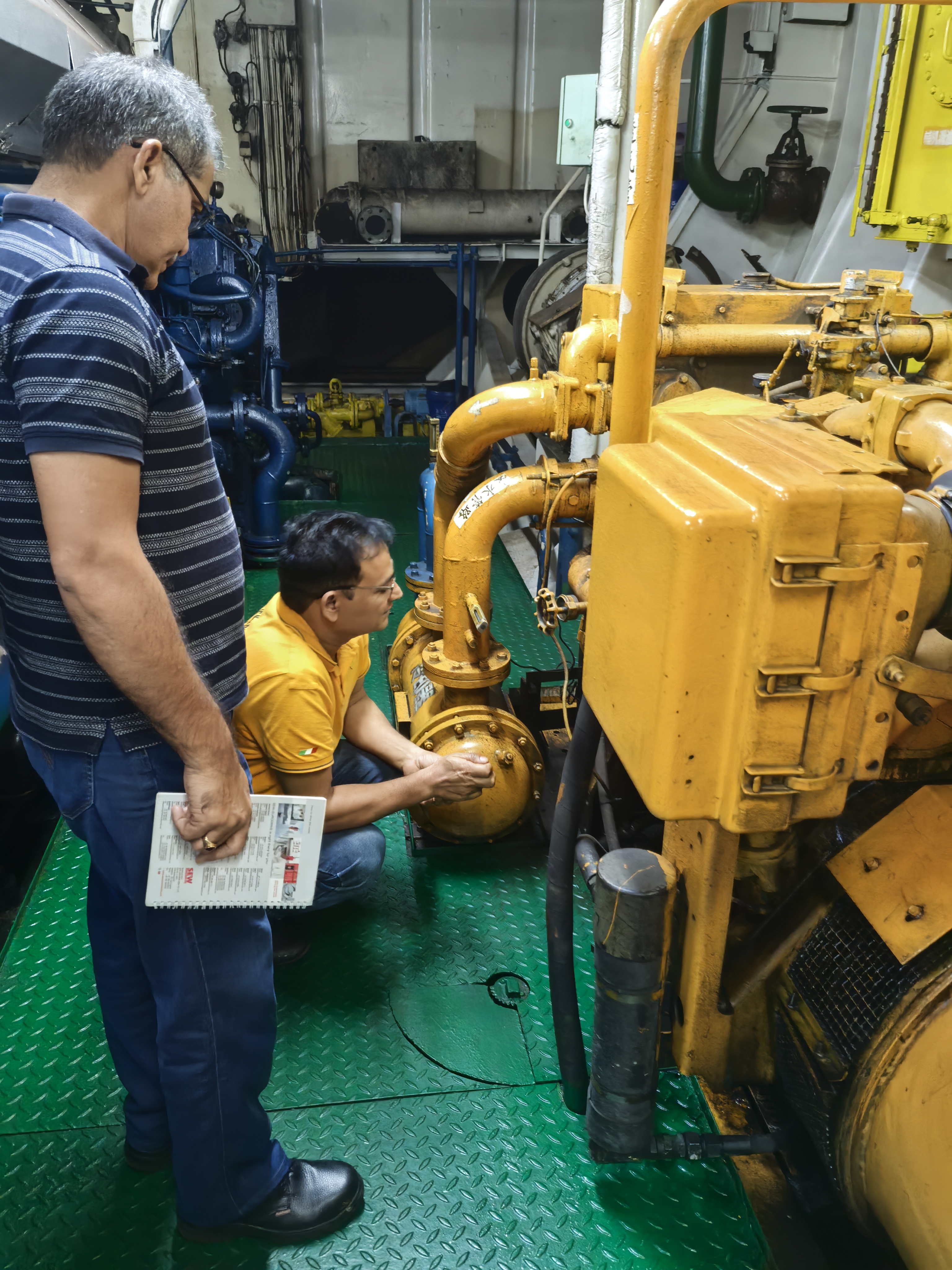 Dutch engineers perform equipment inspection on a dredger before delivery (supporting shipyard and commissioning evidence).
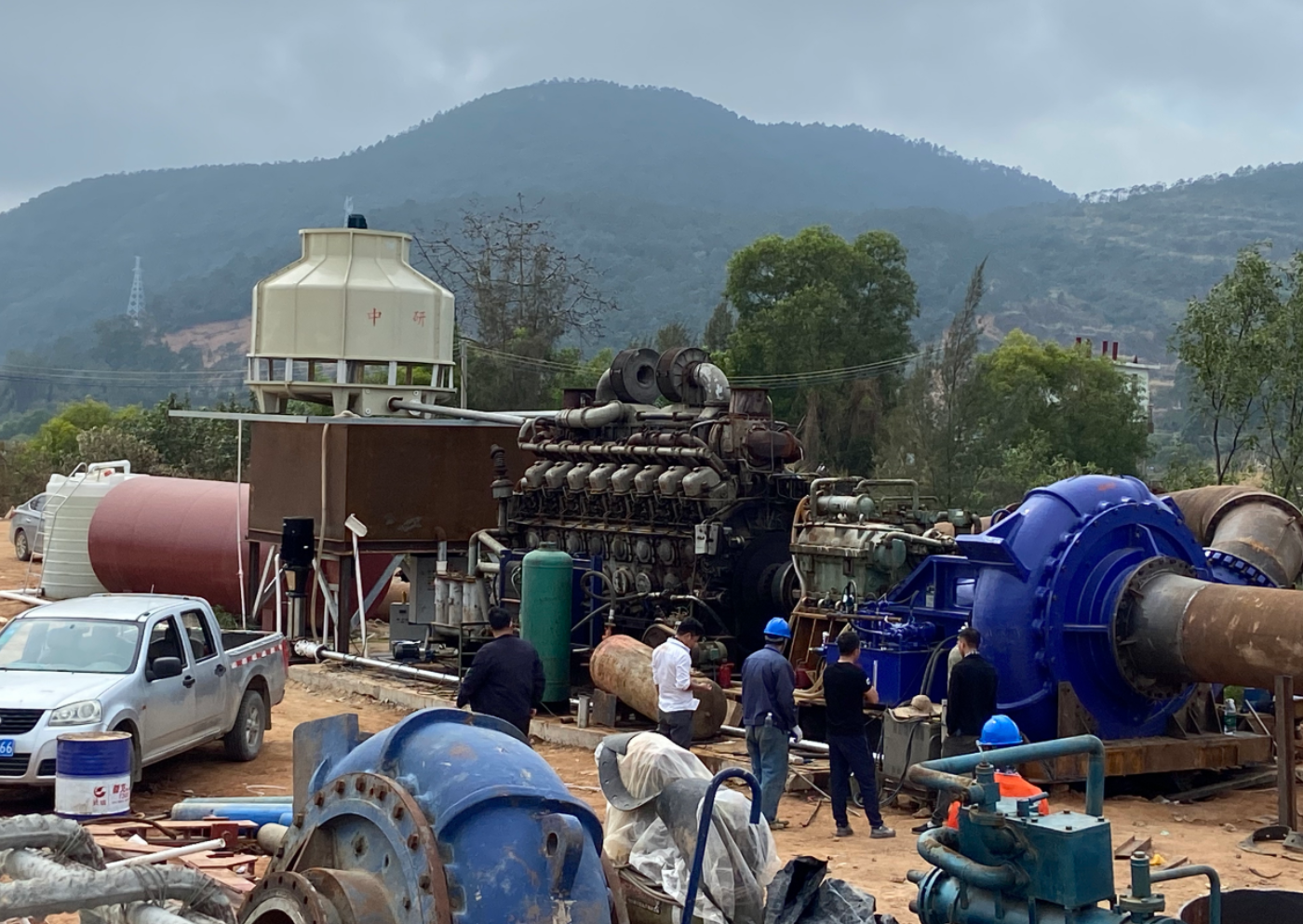 Booster pump station commissioning on a dredging project — an example of scheduled system testing.
Frequently Asked Questions
What is the difference between a Cutter Suction Dredger and a Trailing Suction Hopper Dredger?
A Cutter Suction Dredger uses a rotating cutter to loosen soil and pumps the material through a discharge pipeline; it is efficient for hard soil, clay, and rock and is typically used for port construction, river desilting, and land reclamation. A Trailing Suction Hopper Dredger is a self-propelled vessel that trails suction pipes while sailing and stores material in its own hopper, making it ideal for large-scale offshore and channel dredging where the vessel must transport material to a disposal site.
When should I choose a grab dredger or backhoe dredger instead of a suction dredger?
A grab dredger is suitable for deep-water dredging and for removing boulders or debris, while a backhoe dredger is strong in excavating stiff materials and performing precision dredging in confined areas such as berths and quay walls. Choose these types when the material is too coarse for suction, the working area is too confined for a TSHD, or precision around structures is required.
Can Chinese dredger manufacturers provide classification from IACS societies?
Yes. Chinese manufacturers such as Yanyang Marine can build dredgers to be classed by CCS, BV, LR, DNV, or other IACS societies as required. The buyer should specify the required class society and confirm that the shipyard's design and quality procedures have been accepted by that society before signing the contract.
What is the typical price difference between Chinese and European dredging equipment?
Yanyang Marine states that its products cost approximately 50% less than comparable European brands while maintaining quality. In practice, the exact price gap depends on vessel size, equipment package, classification, and specification. Buyers should compare initial CAPEX, delivery schedule, operating cost, and residual value rather than price alone.
How long does it take to build a new dredger in China?
According to Yanyang Marine, standard vessels can be delivered in 2–3 months and custom-built dredgers in 8–12 months. European newbuilds frequently take 2–3 years. The shorter Chinese delivery time can be decisive for contractors that need to start operations quickly.
Can a supplier provide a sample or quotation before I commit to a full vessel order?
Custom dredgers cannot be sampled in the same way as component products, but a qualified supplier can provide a detailed design proposal, technical specification, classification plan, commercial quotation, and references from previously delivered similar vessels. For buyers seeking confidence before commitment, Yanyang Marine welcomes inquiries and can arrange inspections or quotations based on your project parameters. Contact Info@yanyangmarine.com or +86 159-5290-0547 for a project-specific quote.
Conclusion
Dredging equipment selection starts with the project, not the brand. Define the soil, depth, transport route, production volume, and compliance requirements. Match those requirements to a dredger class: CSD for long-distance hydraulic discharge, TSHD for self-propelled offshore and channel work, grab dredger for deep or coarse material, backhoe for precision in confined areas. When the vessel type is defined, compare suppliers on price, delivery, classification, and total cost of ownership. Chinese manufacturers such as Yanyang Marine offer a practical path for buyers who need IACS-classed, custom-capable dredgers at approximately 50% lower initial cost and with 2–3 month delivery for standard vessels. For custom projects, an 8–12 month build cycle still shortens the path to revenue compared with waiting years for a European newbuild. Whichever option you choose, verify the supplier's track record, inspect the vessel at key construction stages, and put performance guarantees in writing.
Request a Project-Specific Dredger Proposal
Send your project parameters to Info@yanyangmarine.com or contact us on WhatsApp at +86 159-5290-0547 to receive a technical specification and commercial quotation for your port, channel, inland, or offshore dredging project.
Have Questions or Need More Details?
Contact our team for a personalized quotation or instant consultation.
Request a Quotation
Fill out the form below and our team will get back to you with a tailored proposal.
WhatsApp Direct Chat
Prefer to chat in real-time? Message us on WhatsApp for instant assistance & quick answers.
- Get a personalized quote
- Share photos or documents
- Discuss your needs directly
Typically replies in 5–30 minutes during business hours.