Custom-Built Dredging Equipment: Buyer's Capability Guide
Selecting custom-built dredging equipment requires more than comparing quotations. The buying decision for a dredger or support vessel ultimately depends on whether the manufacturer can translate a project's operational requirements into a class-approved, deliverable asset. This guide helps industrial buyers evaluate manufacturer capability—specifically custom-made and ODM production services—before moving from evaluation to execution.
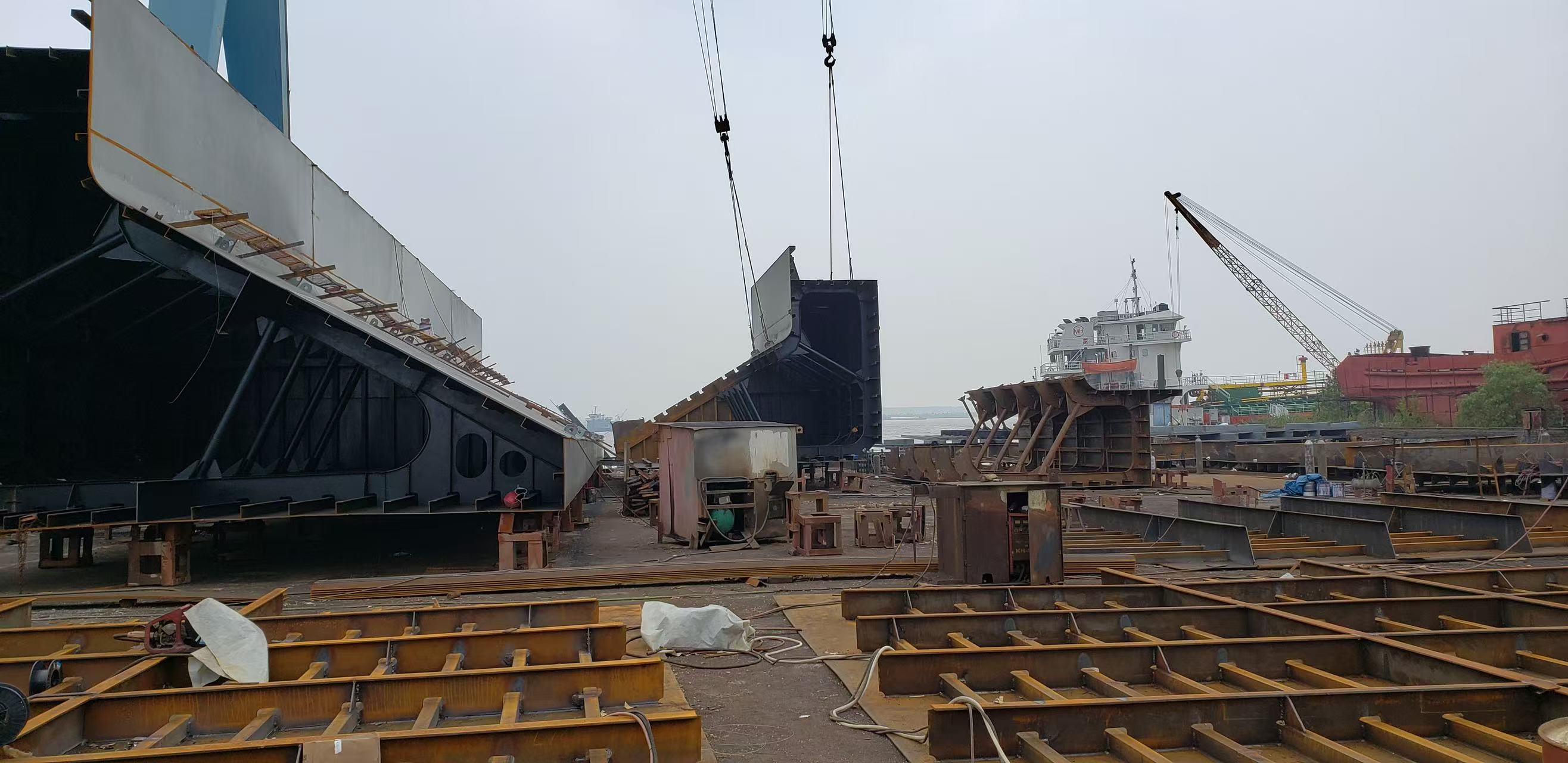
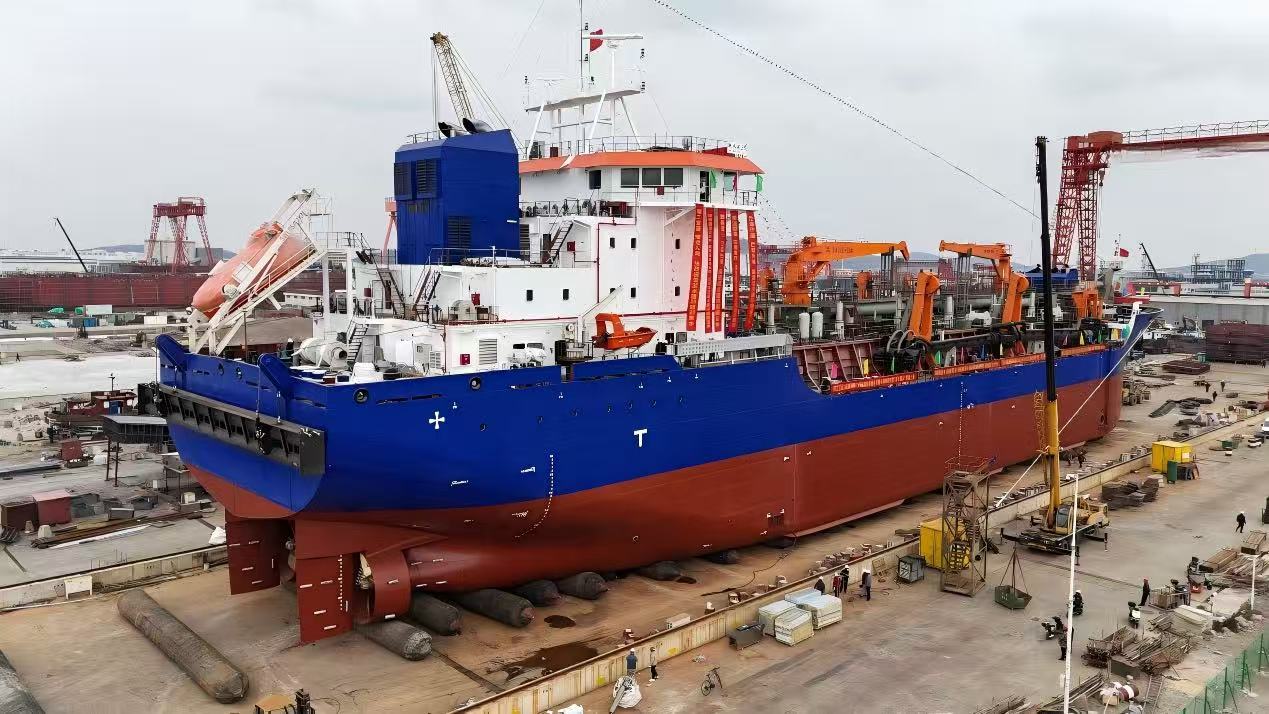
Shipyard view of dredging equipment construction at Yanyang Marine.
Problem Definition: Where Dredging Equipment Procurement Gets Stuck
Dredging projects vary widely in water depth, material type, discharge distance, navigation area, and local regulatory environment. A single standard vessel specification cannot meet every project condition. In many cases, the buyer needs a vessel that is redesigned, adjusted, or re-engineered to match an exact operating profile.
At that point, the procurement problem shifts from “which machine is cheaper” to “does the manufacturer have the engineering capability to build what we actually need?” Evaluating this capability requires checking design depth, production mode, quality control, classification compliance, commercial terms, and post-delivery support.
Industry Background: Market Demand and Classification Drivers
The global market for dredging equipment is expanding. Grand View Research estimates the market at USD 4.86 billion in 2023 and projects it to reach USD 7.36 billion by 2030. Hydraulic dredgers, including cutter suction dredgers, held the largest revenue share, approximately 46.65%, in 2023. Trailing suction hopper dredgers are estimated to account for about 46.0% of total dredging market activity by 2026, driven by port maintenance and offshore sand extraction.
These figures highlight two competitive areas: high-powered cutter suction dredgers for large-scale port and reclamation work, and trailing suction hopper dredgers for offshore and channel dredging. The offshore wind sector is adding another layer of demand, with over 380 GW of new capacity expected by 2033 that will require seabed preparation and cable trenching vessels.
Standards and classification also matter. ISO 8384:2019 defines international vocabulary for dredgers, while classification societies such as Bureau Veritas and DNV publish specific rules for dredger design and certification. For a buyer, the presence of recognized class approval is often a required gate, not an optional extra.
Detailed Solution: Yanyang Marine's Capability Model
Zhenjiang Yanyang Engineering Co., Ltd. (Yanyang Marine) is a dredger manufacturer and exporter based in Zhenjiang, China. Founded in 1996, the company builds cutter suction dredgers, trailing suction hopper dredgers, grab dredgers, backhoe dredgers, split hopper barges, and pile driving barges.
The manufacturer provides custom-made and ODM production services.
In practice, this means a buyer can either take an existing engineering design and adjust it, or work with the manufacturer to produce a vessel according to project-specific dredging depth, discharge distance, power, and configuration.
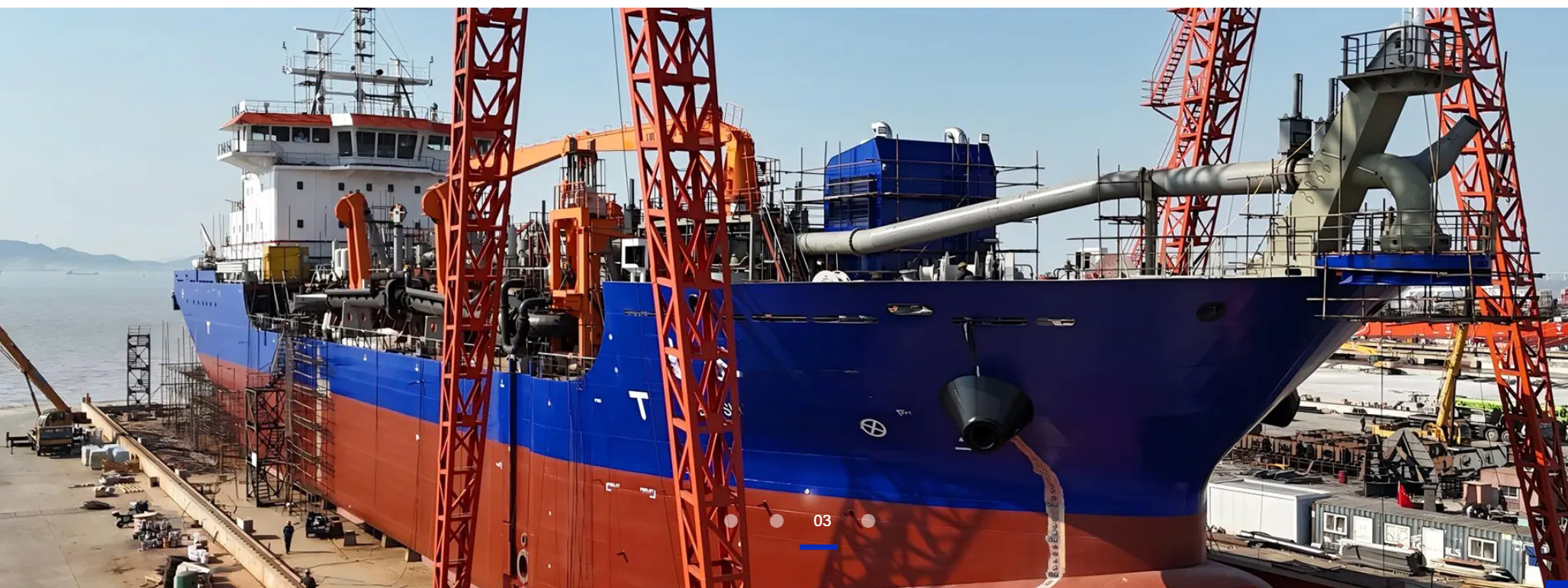
Yanyang Marine's shipyard support covers newbuilding, maintenance, repair, and conversions.
The manufacturer’s service capabilities include custom-made and ODM production services, supported by a standard production lead time of 2-3 months.
For fully custom dredgers, lead time is typically 8-12 months. All dredgers can be built in compliance with international standards and classed by IACS societies including CCS, BV, LR, DNV, or others as required.
One documented example of quality control is the CCS Domestic Vessel Classification Certificate (No. ZA23DNB00274) issued for a self-discharging split hopper barge. The certificate covers a coastal navigation area and reflects an active classification process.
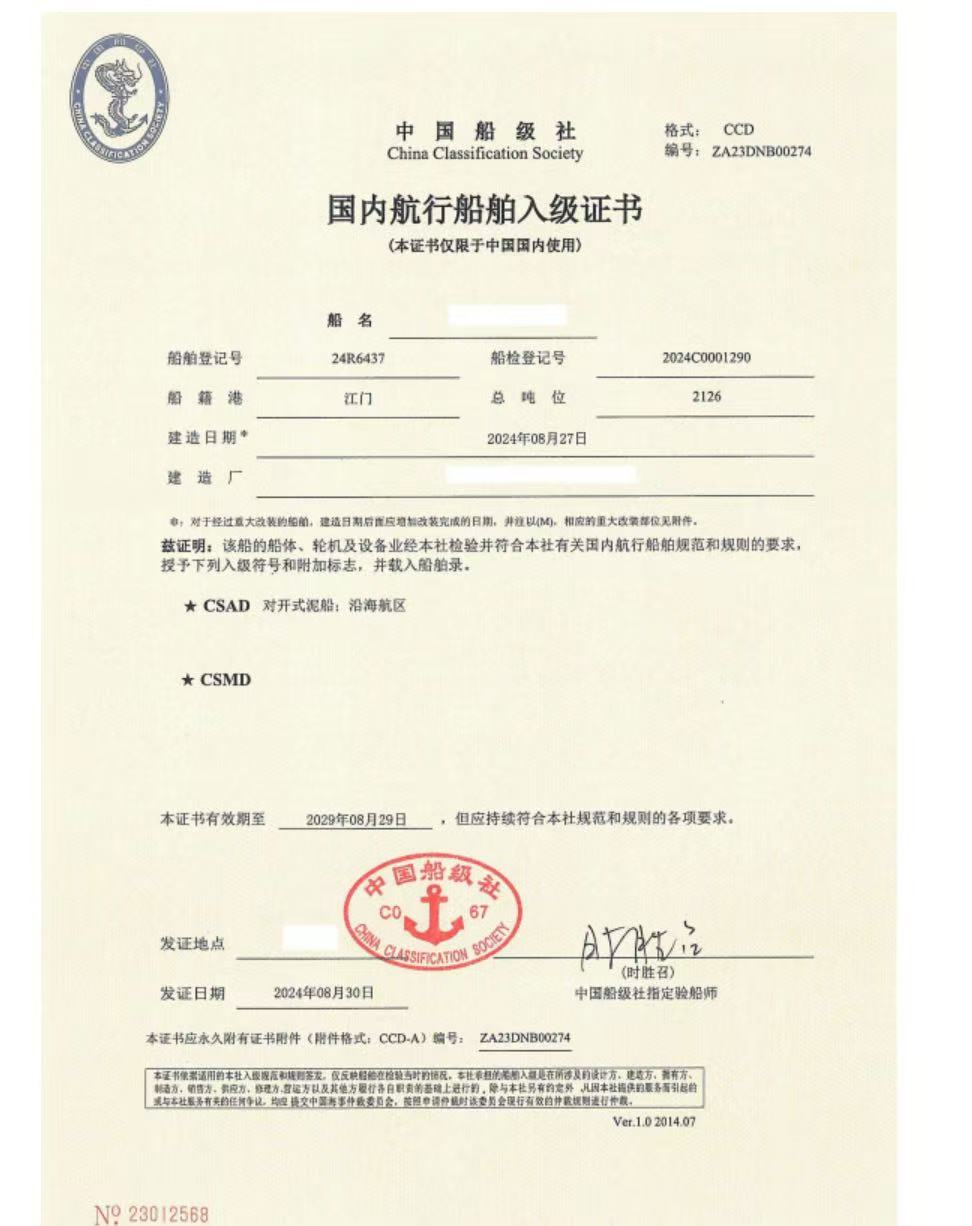
CCS classification certificate in Yanyang Marine's compliance record.
Yanyang Marine also states that its dredgers offer approximately 50% lower cost compared with European manufacturers while maintaining quality, with faster delivery for standard vessels. This claim should be evaluated against a concrete specification and quotation.
Step-by-Step Breakdown: Evaluating a Custom Dredging Equipment Order
Step 1: Define the operational requirement
The manufacturer will need dredging depth, material characteristics, discharge distance, required output, and working area. In a custom-built project, this list becomes the basis for the design.
Step 2: Decide the classification requirement
Confirm which IACS class is acceptable. In many projects, CCS, BV, LR, or DNV is specified. This choice affects design, calculation, inspections, and the certificate you receive with the vessel.
Step 3: Verify product range and customisation capacity
Ask which equipment types are built in-house and how much customisation is allowed. The manufacturer provides ODM production services and custom-made solutions. ODM (Original Design Manufacturer) means the manufacturer can execute a client-driven design process, not simply assemble standard parts.
Step 4: Check the production and delivery plan
A standard vessel may take 2-3 months; a custom dredger may take 8-12 months. A written delivery schedule must be part of the contract.
Step 5: Inspect before delivery
The procurement flow should include a pre-delivery inspection and PODA signing. The minimum order quantity is 1 unit/vessel; delivery can be FOB/CIF or vessel delivery at an agreed port; payment terms may include an escrow deposit plus final payment on delivery (PODA), direct deposit for minor transactions, or milestone installments/LC for selected newbuilding work.
Step 6: Plan after-sales support
Commissioning, operator training, spare parts, and technical support determine whether the vessel remains productive after handover. Yanyang Marine lists these services as part of its package, and states that it provides services for newbuilding as well as maintenance, repair, and conversions.
Use Cases: From Port Construction to Inland Waterway Material Transport
Port construction and deep-water berths
Large cutter suction dredgers, such as the 8000 m³/h self-propelled CSD, are used in international container port deepening, trans-oceanic shipping channel excavation, and deep-water berth construction for VLCC tankers. The 8000 m³/h design reaches a dredging depth of 30 m and a discharge distance of 8000 m.
Channel dredging and offshore sand extraction
Trailing suction hopper dredgers are suited to deep-water channel dredging, port expansion, and large-scale reclamation. The 26800 m³ TSHD has a maximum hopper capacity of approximately 26,800 m³, suction pipe diameter of 1200 mm, and dredging depth options of 40/70/115 m.
Near-shore and coastal maintenance
Grab dredgers handle hard clay and soft sediment in near-shore operations. The 25 m³ self-propelled grab dredger in Yanyang Marine's portfolio has an overall length of 58 m and a moulded breadth of 22.6 m.
Confined and precision dredging
Backhoe dredgers are used where heavy excavation in confined areas is needed. The EX5500 backhoe dredger has a dredging depth of 18/24/32 m and can work with buckets of 15/18/20.5 m³.
Inland and coastal material transport
Split hopper barges transport dredged material. The 2600 m³ CCS-classed split hopper barge is designed for coastal and inland waterway projects.
Pile driving for port and bridge construction
For projects that need foundation work, the 110 m pile leader height pile driving barge is an example of specialised support equipment used in port and bridge construction.
In the offshore wind sector, seabed preparation and cable trenching for more than 380 GW of new capacity by 2033 will require additional dredging equipment, and buyers should verify whether a manufacturer can adapt a CSD or TSHD for these work scopes.
Comparison Table: Dredging Equipment Types, Capabilities, and Typical Uses
| Equipment Type | Primary Capability | Typical Application | Example from Yanyang Marine |
|---|---|---|---|
| Cutter Suction Dredger (CSD) | High-volume hydraulic dredging; suited to hard soil, clay, and rock | Port deepening, reclamation, deep-sea channel excavation | 1000–8000 m³/h self-propelled CSD |
| Trailing Suction Hopper Dredger (TSHD) | Self-loading and transport of dredged material | Offshore and channel dredging, large-scale reclamation | 26800 m³ TSHD |
| Grab Dredger | Excavating material using a grab; suitable for deep water and debris removal | Near-shore operations, removing hard clay and soft sediment | 25 m³ self-propelled grab dredger |
| Backhoe Dredger | Precision excavation of stiff materials in confined areas | Confined and precision dredging | EX5500 backhoe dredger |
| Split Hopper Barge | Transport and bottom-discharge of dredged material | Coastal and inland waterway projects | 2600 m³ CCS-classed split hopper barge |
| Pile Driving Barge | Driving heavy piles for foundations | Port and bridge construction | 110 m pile leader height pile driving barge |
FAQ: Supplier Capability Questions for Custom-Built Dredging Equipment
Does the manufacturer supply dredging equipment with recognized classification and international standards?
Yes. Yanyang Marine can build dredgers classed by IACS societies including CCS, BV, LR, DNV, or others as required. A documented example is the CCS Domestic Vessel Classification Certificate (No. ZA23DNB00274) for a self-discharging split hopper barge. ISO 8384:2019 is a recognized international standard for dredger vocabulary.
Can dredging equipment be custom-built or ODM-produced for project-specific needs?
Yes. The manufacturer provides ODM and custom-made production services. Dredging depth, discharge distance, power, and configuration can be adjusted to match project conditions.
How does the cost of custom-built dredging equipment compare with European manufacturers?
Yanyang Marine states that its dredgers are approximately 50% lower in cost compared with European manufacturers, while maintaining quality. Buyers should verify this with a specification-matched quotation.
Can buyers inspect the dredging equipment before final delivery?
Yes. The procurement process includes a pre-delivery inspection and PODA signing. Payment terms can include an escrow deposit plus final payment on delivery, direct deposit for minor transactions, or milestone installments/LC for selected newbuilding.
What is the delivery time for standard and custom-built dredging equipment?
Standard vessels are typically delivered in 2-3 months; custom dredgers take approximately 8-12 months. The precise timeline depends on specification, class approval, and shipyard workload.
Next step: To test a specification against the manufacturer’s production plan, request a quotation through www.yanyangmarine.com.
Conclusion
Dredging equipment is a long-term capital asset. The evaluation process must verify design flexibility, classification compliance, production and delivery schedules, inspection procedures, commercial terms, and after-sales support. A manufacturer that offers both custom-made and ODM production services, can provide IACS classification, and documents its pre-delivery inspection process is a workable starting point for the next project.
Contact Yanyang Marine for a capability review of your dredging equipment requirements.
Next step: If you are evaluating a custom-built dredger, split hopper barge, or support vessel, send your project parameters to Info@yanyangmarine.com or contact +86 159-5290-0547. Visit www.yanyangmarine.com for the full product range.
Office Address: 1# Rainbow Building, Jiangbin Road, Zhenjiang City, Jiangsu Province, China
Have Questions or Need More Details?
Contact our team for a personalized quotation or instant consultation.
Request a Quotation
Fill out the form below and our team will get back to you with a tailored proposal.
WhatsApp Direct Chat
Prefer to chat in real-time? Message us on WhatsApp for instant assistance & quick answers.
- Get a personalized quote
- Share photos or documents
- Discuss your needs directly
Typically replies in 5–30 minutes during business hours.