Dredging Equipment Partnership FAQ: Acceptance Criteria and Long-Term Support
A dredging equipment partnership is a supply framework that fixes acceptance criteria, purchasing terms and post-delivery support in a single agreement, instead of negotiating each item separately once a hull is already under construction. Buyers who define those three layers before signing usually avoid the disputes that appear at the first class survey, when a certificate's scope, a spare-part interval or a support commitment turns out to mean something other than what was assumed.
This article answers the questions importers, marine contractors and fleet owners ask most often when they move from a single-vessel purchase to a multi-year relationship with a dredger builder. It uses verified product, capability and classification facts from Yanyang Marine — the trading identity of Zhenjiang Yanyang Engineering Co., Ltd., a dredger manufacturer and exporter based in Zhenjiang, Jiangsu Province, China, founded in 1996, supplying cutter suction dredgers, trailing suction hopper dredgers, split hopper barges, grab dredgers, backhoe dredgers and pile driving barges.
Problem Definition: Where a One-Time Purchase Breaks Down
The failure point in most dredging equipment procurement is not the vessel itself. It is the gap between what the contract says, what the class certificate actually covers, and what the buyer expects to receive in years three to five. Three recurring gaps explain most of that distance.
1. Acceptance terms are written as adjectives, not criteria
Words such as "classed", "tested" or "commissioned" are not acceptance criteria. A workable acceptance clause names the classification society, the certificate scope, the certificate number and the validity window. Without those four elements, a delivered vessel can satisfy the contract and still fall outside the trade the buyer intended.
2. Support scope is written as if all dredgers fail in the same places
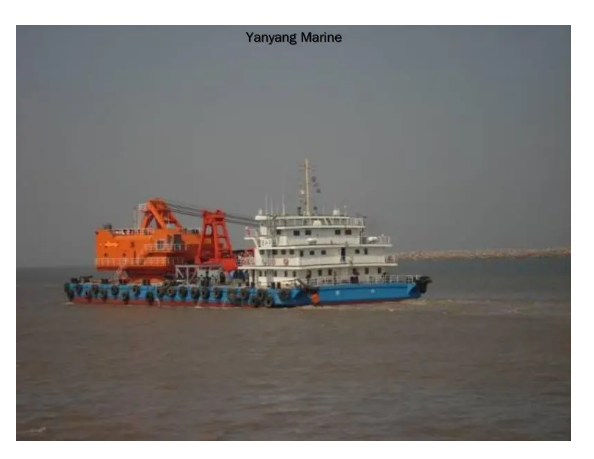
A 26,800 m³ trailing suction hopper dredger and a 2,600 m³ split hopper barge do not share a maintenance profile. One is a self-loading offshore unit with Wartsila main engines, HK dredge pumps and ZF thrusters; the other is a hull-and-hydraulics asset with a split hopper, twin main engines rated 3,740 kW each and Ice Class B. A single support annex cannot serve both.
3. Purchasing terms are separated from lifecycle planning
Lead time and survey cycle belong in the same document. On the supplier side, standard vessels are delivered in 2–3 months while custom dredgers take 8–12 months; on the buyer side, a classification certificate may run for five years. If the delivery schedule and the support schedule are prepared by different teams, the first survey arrives without a spare-parts plan behind it.
Industry Background: Why Long-Term Frameworks Are Replacing One-Off Buying
The dredging equipment base is large, capital-intensive and supported by a limited number of component suppliers, which pushes buyers toward multi-year relationships rather than repeat one-off tenders. Published market data explains the scale.
- The global dredging equipment market was valued at USD 4.86 billion in 2023 and is projected to reach USD 7.36 billion by 2030 (Grand View Research).
- Hydraulic dredgers, including cutter suction dredgers, held the largest revenue share of approximately 46.65% of that market in 2023 (Grand View Research).
- Trailing suction hopper dredgers are estimated to account for 46.0% of total dredging market activity by 2026, driven by port maintenance and offshore sand extraction (Future Market Insights).
- Offshore wind is a key emerging driver, requiring specialised vessels for seabed preparation and cable trenching to support over 380 GW of new capacity by 2033 (Global Wind Energy Council).
- The top-tier global landscape is dominated by Royal IHC, Damen Shipyards Group, Jan De Nul Group and Boskalis (Fortune Business Insights) — a small group of integrated builders and contractors rather than a broad field of interchangeable sellers.
Two standardisation developments matter for contracting. ISO 8384:2019 provides the international vocabulary and definitions for dredgers, including specific terms for TSHD and CSD, so specification language can be written unambiguously. Classification societies such as Bureau Veritas and DNV publish dredger-specific rules, including reduced freeboard guidelines for dredgers and certification paths for LNG-fuelled vessels. Both are directly usable as contract references rather than as marketing statements.
Detailed Solution: A Three-Layer Partnership Framework
A partnership that survives the first survey is built in three layers: purchasing terms, acceptance criteria, and vessel-type-specific support. Each layer produces documents that the next layer depends on.
Layer 1 — Purchasing terms agreed before design starts
Yanyang Marine builds on an ODM and custom-made basis and also holds ready stock for sale, which produces three distinct commercial paths with different contractual consequences:
- Ready stock: an existing or completed vessel. Configuration is fixed; the timeline covers inspection, transfer and delivery logistics.
- Standard newbuild: 2–3 months delivery for standard vessels.
- Custom newbuild: 8–12 months, where dredging depth, discharge distance, power and configuration are engineered around the working environment and local regulations.
Ordering is quoted against the supplier's stated TSHD hopper-capacity band of 1,100 m³ to 26,800 m³ for newbuilding, which is also the range that determines how much of the design is standardised and how much is project-specific. Long-term value comes from a fourth element that buyers often overlook: after-sales scope covers newbuilding as well as maintenance, repair and conversions, so an existing fleet can be brought into the same relationship instead of being serviced independently.
Layer 2 — Acceptance criteria that name the society, the scope and the dates
Acceptance should be written so that a third party can verify it. The verifiable reference points in this fleet are specific. The 2,600 m³ split hopper barge holds a Domestic Vessel Classification Certificate issued by CCS, certificate number ZA23DNB00274, under the CCS Rules for Classification of Sea-going Ships, applicable to the Domestic market, with a scope of coastal navigation area for a self-discharging hopper barge, issued 2024-08-30 and valid to 2029-08-29. The 25 m³ self-propelled grab dredger is a ZC-classed vessel for near-shore operations. The 26,800 m³ trailing suction hopper dredger is classed CCS with CSA Trailing Suction Dredger, dredging within R1 and DP-1, together with AUT-0 notation.
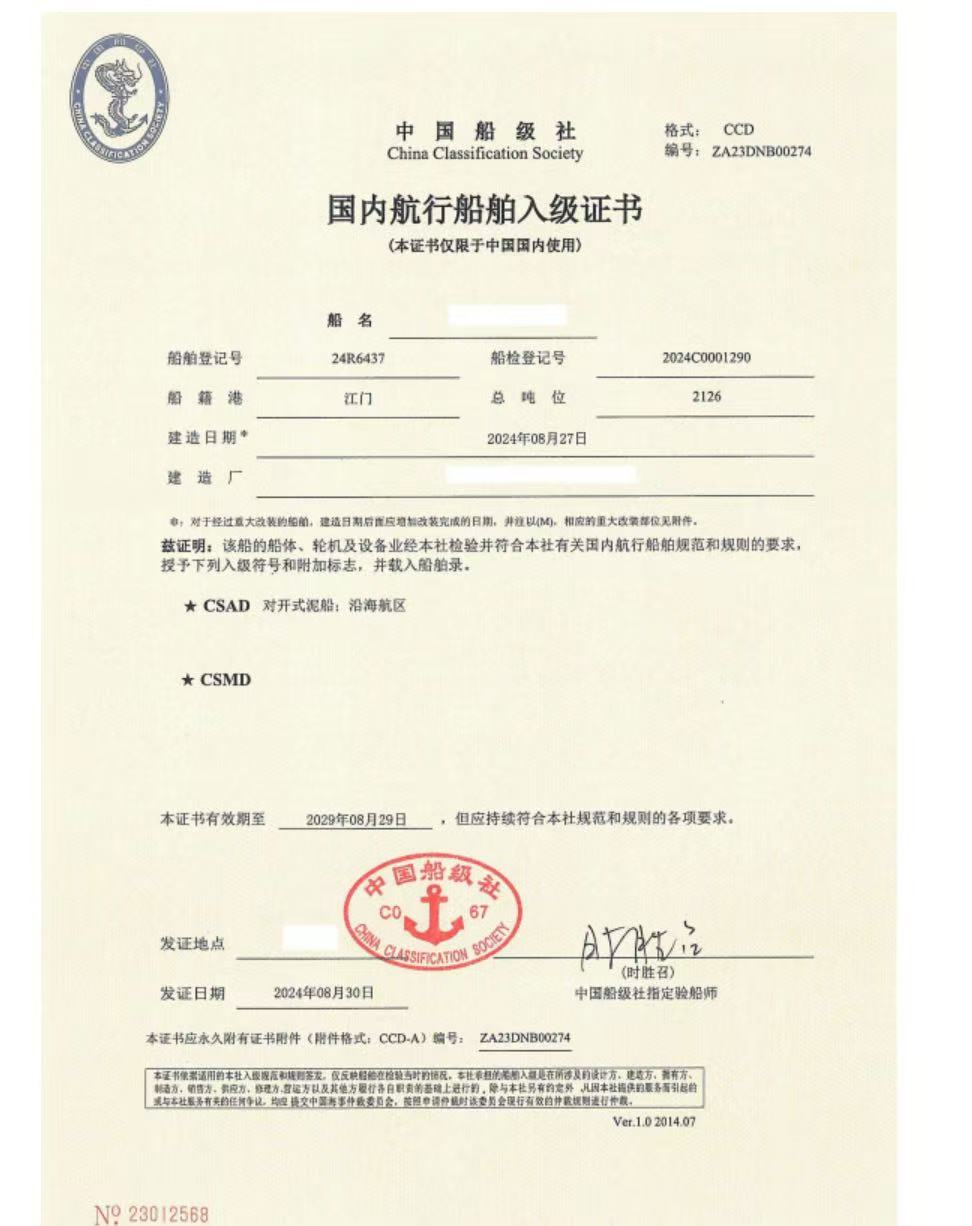
For vessels intended for international service, the same framework should be agreed with an IACS society. Yanyang Marine's dredgers can be classed by IACS societies including CCS, BV, LR and DNV as required, and IACS certificates are also used as the quality-control benchmark during construction. A practical acceptance annex therefore contains: the named society, the notation list, the certificate number and validity, the trial and commissioning protocol, and the documentation and training handover. Written acceptance should also include factory construction and testing, shipping and global delivery, and on-site commissioning and operator training.
Layer 3 — Long-term support defined vessel by vessel
Long-term support is where vessel type changes the agreement most. The sections below use verified configuration facts to show why.
Cutter suction dredgers (CSD)
The CSD range spans 1,000–8,000 m³/h, with a super-size 8,000 m³/h self-propelled unit configured for 30 m dredging depth and 8,000 m discharge distance, with a length overall of 121 m, width of 25 m and depth of 8.5 m. Because these units are built around a cutter head, dredge pump and discharge pipeline, the long-term support profile is wear-part dominated. Applications include international container port deepening, trans-oceanic shipping channel excavation, large-scale offshore airport construction, coastal city expansion and land reclamation, and deep-water berth construction for VLCC tankers.
Trailing suction hopper dredgers (TSHD)
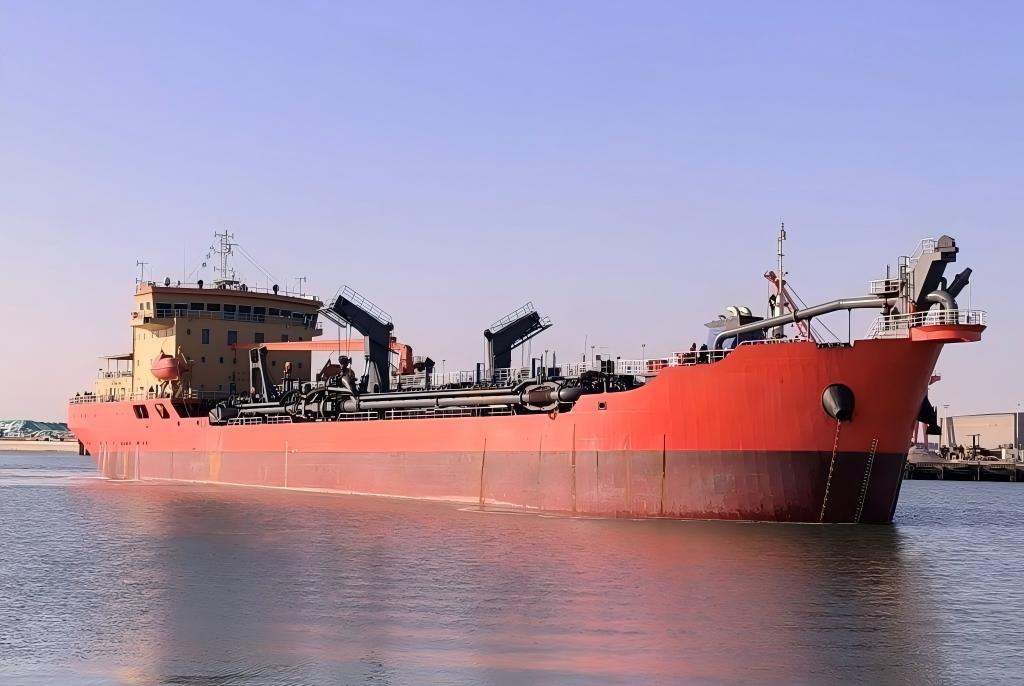
The 26,800 m³ TSHD is the most machinery-intensive asset in the fleet: approximately 171.20 m length overall, 36.00 m moulded breadth, 15.80 m moulded depth, 9.50 m draft at international freeboard, a Φ1200 mm suction pipe, dredging depth of 40/70/115 m, speed of 11.5–15.5 kn, and 27,726 kW total installed power. The propulsion and dredging train includes Wartsila 3 × 8000 kW main diesel engines, Wartsila 2 × 1600 kW auxiliary/harbour generators, a Cummins 1 × 526 kW emergency generator, Wartsila 2 × 10500 kW main thrusters, HK 2 × 6000 kW inboard dredge pumps, HK+BKKER 2 × 3300 kW underwater pumps, CCCC 2 × 2000 kW jet water pumps, and ZF bow and stern thrusters rated 2 × 1100 kW and 1 × 1100 kW. Support for this vessel is an OEM-component and automation service plan, not a consumables plan.
Grab dredgers
The self-propelled 25 m³ grab dredger is a 2012-completed vessel with 58.00 m length overall, 22.60 m moulded breadth, 4.80 m moulded depth and 3.00 m design draft, a coastal navigation area, a crew of 10 and a designed displacement of 3,651.308 t. Gross tonnage is 2,349 T and net tonnage 705 T. Propulsion uses two Weichai X6170ZC-21 main engines rated 456 kW each at 1,500 r/min through HCD400A reduction gearboxes with a 5:1 ratio. Support for a grab dredger concentrates on grab and wire renewal plus main-engine spares rather than on a full dredging train.
Backhoe dredgers
The EX5500 self-propelled backhoe dredger has 71.5 m length overall, 22 m beam and 2.5 m draft, with two Hitachi EX 5500 excavator units providing 2 × 1076 kW (2,152 kW combined). Dredging depth options are 18/24/32 m, bucket capacity options are 15/18/20.5 m³, and propulsion power is 700 kW (2 × 350 kW). Because the digging function comes from a hydraulic excavator, the long-term requirement is excavator hydraulics, bucket wear parts and OEM part sourcing, and the vessel is configured for long-term offshore dredging operations.
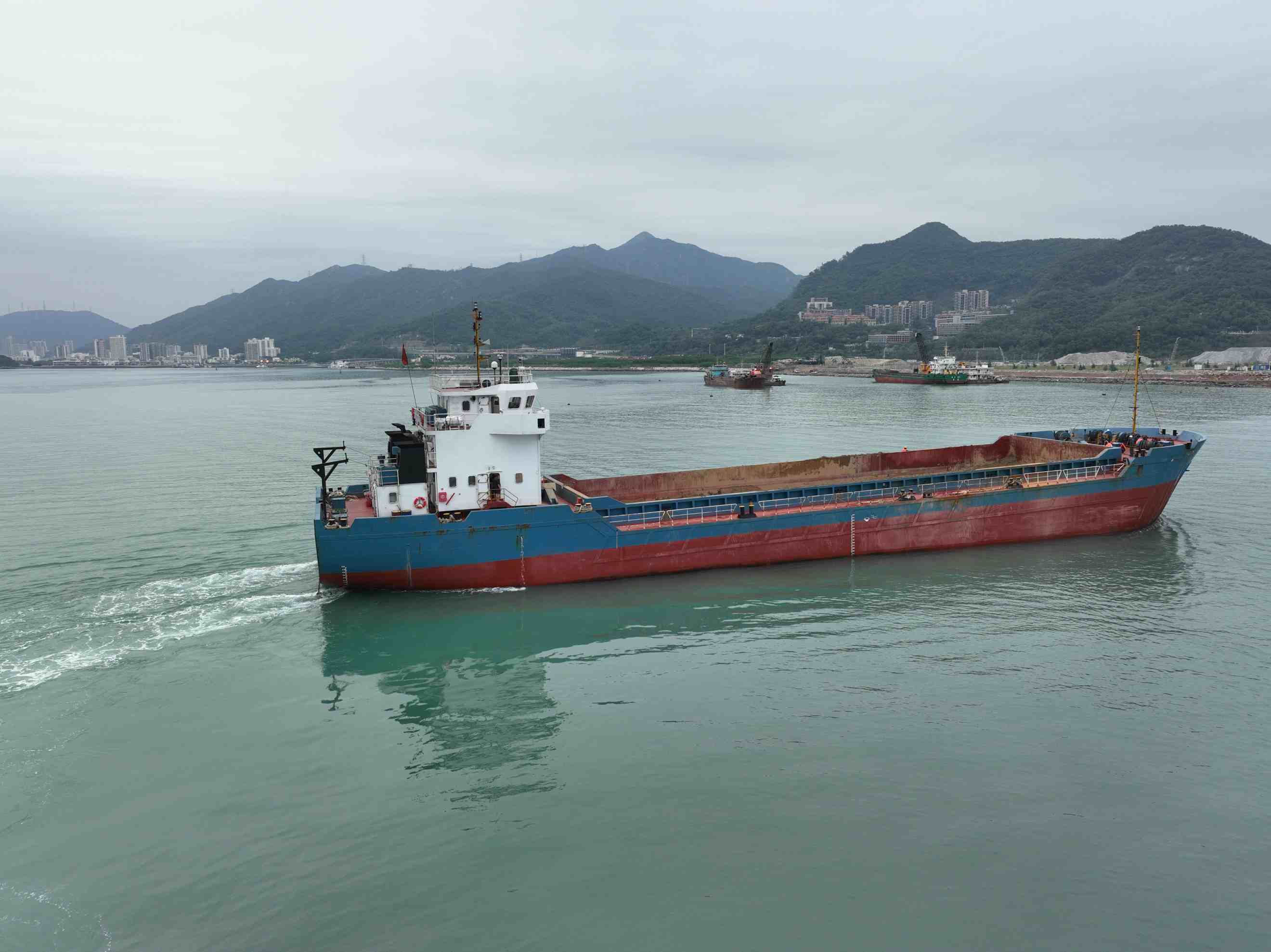
Split hopper barges
The 2,600 m³ split hopper barge is part of a 1,200–3,200 m³ type range, with 76.95 m length overall, 75.92 m waterline length, 15.60 m moulded breadth, 6.00 m moulded depth, 4.00 m design draft, a 9.15 m beam and 0.60 m frame spacing. Two main engines rated 3,740 kW each drive the vessel, which carries a crew of 10 and holds Ice Class B. It is designed for transporting spoil and is widely used in coastal and inland waterway projects. Support here is hull, split-hopper hydraulic system and survey-cycle management — the class certificate for this unit runs from 2024-08-30 to 2029-08-29.
Pile driving barges
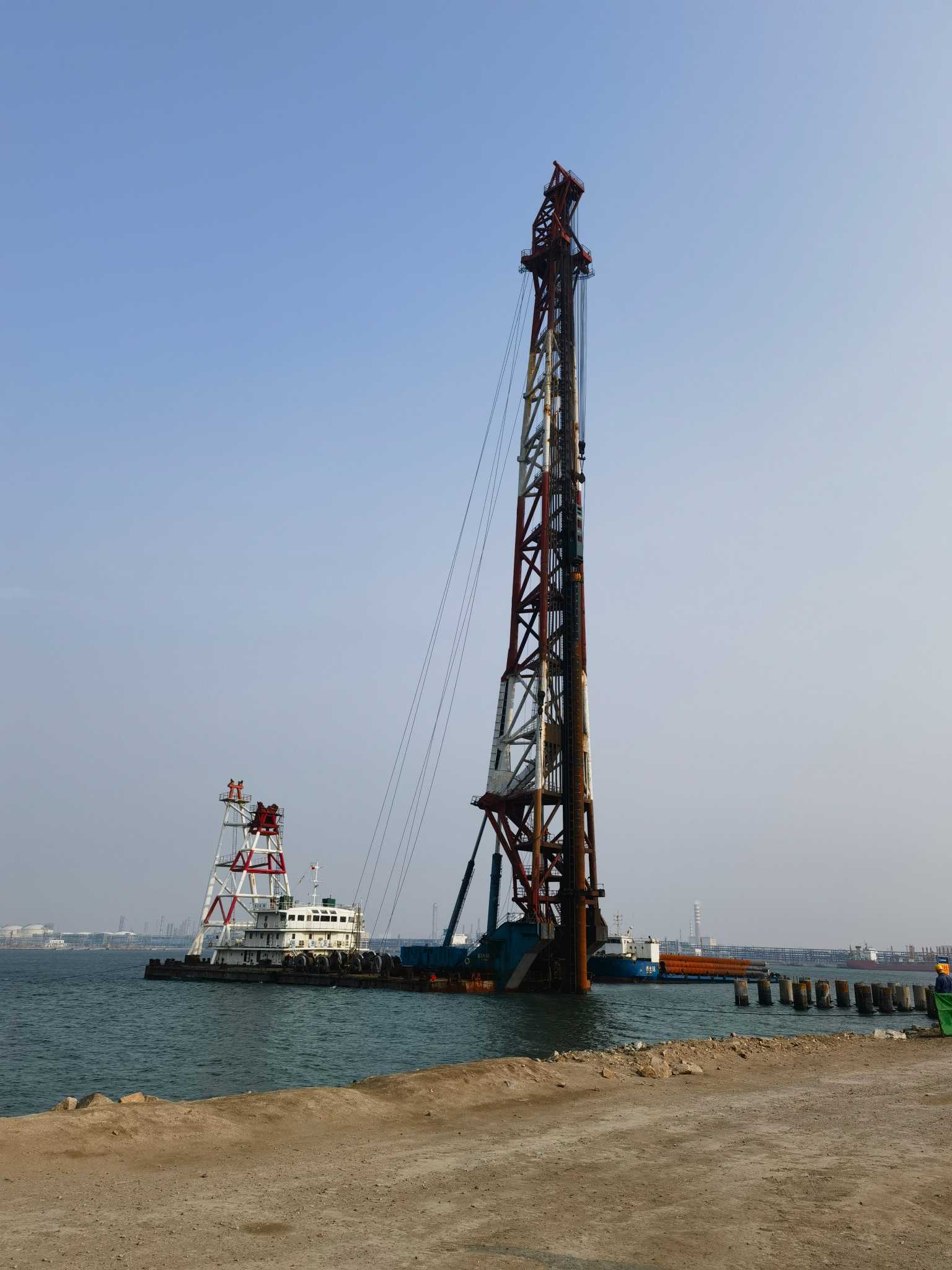
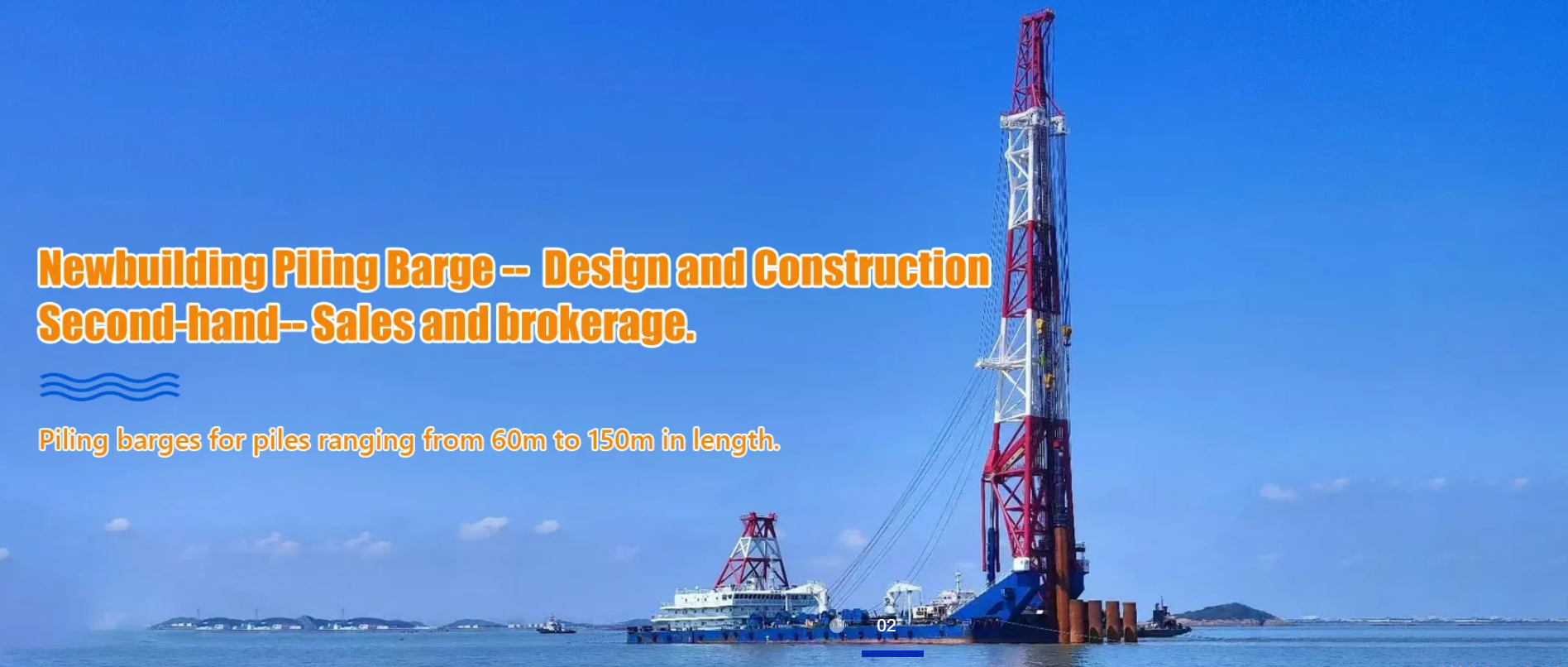
The 110 m pile leader height pile driving barge is a pile-driving vessel with approximately 118.50 m length overall, 37.70 m breadth and 7.70 m depth. Pile frame height at design draft is 137.00 m, with a typical planting pile diameter of Ø4000 mm, a typical planting pile length of 107 m plus water depth, and a typical planting pile weight of 400 t. It is applied in port and bridge construction. Long-term support is dominated by the pile leader, positioning equipment and heavy-lift duty cycles rather than by dredge pumps.
Step-by-Step Breakdown: Turning a Quotation into a Partnership
The sequence below converts a single-vessel enquiry into a documented relationship. Each step produces an artefact the next step consumes.
- Define the operating envelope. State navigation area, working depth, soil type, discharge distance and completion schedule. These parameters decide whether a CSD at 1,000–8,000 m³/h, a 26,800 m³ TSHD, a grab dredger or a backhoe dredger is the correct base platform.
- Fix the compliance requirement in writing. Decide whether the project needs a Domestic certificate such as the CCS certificate held by the split hopper barge (No. ZA23DNB00274), or an IACS class with a specific notation list such as CCS, CSA Trailing Suction Dredger, dredging within R1, DP-1 and AUT-0 on the TSHD.
- Write measurable acceptance criteria. Name the society, the certificate scope, the certificate number, the validity dates, the trial protocol, the commissioning requirement and the operator training deliverable.
- Map support scope to vessel type. Build separate annexes for pump-and-pipeline assets, machinery-and-automation assets, excavator-based assets, barge hulls and piling assets, rather than one generic spares list.
- Select the purchasing path. Ready stock, standard newbuild at 2–3 months, or custom newbuild at 8–12 months — and confirm the capacity band being quoted.
- Verify supplier capability before commitment. Review the construction record, engineering resource and quality-control regime. Yanyang Marine reports 30+ large dredger construction projects delivered, a 10-person R&D team, a 50-person organisation founded in 1996, a 100% export ratio, and IACS certificates used as quality control.
- Align the review calendar with the certificate cycle. Set spare-parts review and dry-docking planning against the certificate validity window — for example 2024-08-30 to 2029-08-29 on the 2,600 m³ split hopper barge — so survey preparation is scheduled rather than reactive.
Use Cases: Where the Framework Changes the Outcome
Port construction and deep-water channel work
Port and channel projects combine a high-output cutter suction dredger for hard material and a large trailing suction hopper dredger for bulk removal and transport. The 8,000 m³/h self-propelled CSD with 30 m dredging depth and 8,000 m discharge distance covers reclamation and deep-sea channel excavation, while the 26,800 m³ TSHD covers deep-water channels, port expansion and large-scale reclamation in open-sea conditions. Because both units carry different critical components, the partnership needs two support annexes, not one.
Coastal maintenance and inland waterway work
Routine maintenance dredging and river desilting are usually served by barges and smaller units. The 1,200–3,200 m³ split hopper barge family, with Ice Class B and twin 3,740 kW engines, is designed for coastal and inland waterway transport of spoil, and the scope of its CCS certificate is explicitly a coastal navigation area. Matching the certificate scope to the actual working area is the single most common compliance correction made at contract stage.
Confined-area and hard-material excavation
Backhoe and grab dredgers handle materials and geometries that suction systems cannot. The EX5500 backhoe works at 18/24/32 m dredging depth with 15/18/20.5 m³ bucket options, and the 25 m³ grab dredger removes hard clay and soft sediment in near-shore operations under ZC class. Their support needs are mechanical and hydraulic rather than pump-based.
Port and bridge foundation works
Pile driving barges operate on a different lifecycle from dredgers. With a 137.00 m pile frame height, Ø4000 mm planting piles up to 107 m plus water depth, and typical pile weights of 400 t, a 110 m pile leader height barge serves port and bridge construction. Buyers entering this segment often start with a second-hand unit to validate the working method, which is why newbuild and second-hand sale of piling barges are both part of the same portfolio.
Fleet renewal and conversion programmes
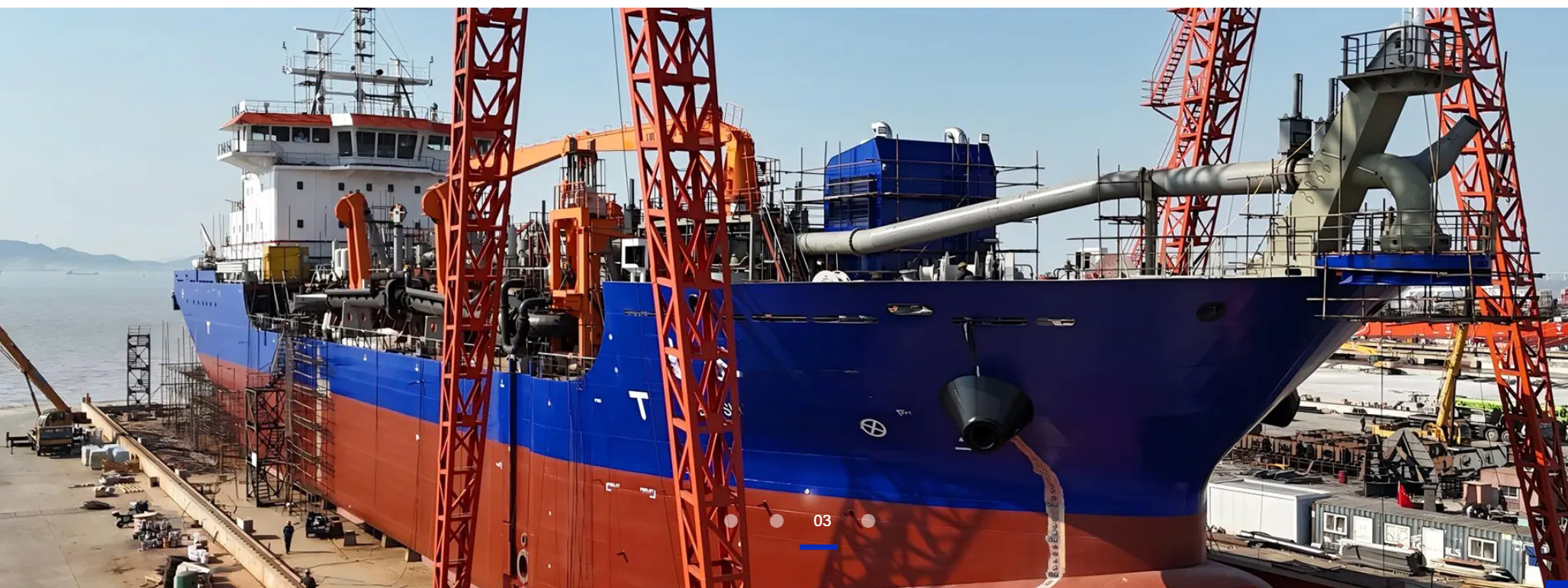
Because after-sales scope covers newbuilding as well as maintenance, repair and conversions, a partnership can begin with an upgrade rather than a purchase. This path suits operators whose fleet is serviceable but whose compliance or productivity position needs to change before new tonnage is justified.
Comparison Table: Matching Vessel Type to Verified Configuration and Support Focus
| Vessel type | Verified configuration (selected) | Class / compliance reference | Long-term support focus |
|---|---|---|---|
| Cutter suction dredger (CSD) | 1,000–8,000 m³/h range; 8,000 m³/h self-propelled unit at 121 m LOA, 25 m width, 8.5 m depth, 30 m dredging depth, 8,000 m discharge distance | Can be classed by IACS societies including CCS, BV, LR, DNV as required | Cutter head, dredge pump and discharge pipeline wear parts; pump overhaul planning |
| Trailing suction hopper dredger (TSHD) | 26,800 m³ hopper; 171.20 m LOA; Φ1200 mm suction pipe; dredging depth 40/70/115 m; 27,726 kW installed; Wartsila engines and thrusters, HK pumps, ZF thrusters | CCS; CSA Trailing Suction Dredger; dredging within R1; DP-1; AUT-0 notation | OEM-grade machinery spares, dredge pump and underwater pump service, thruster and automation support |
| Grab dredger | Self-propelled 25 m³ grab; 58.00 m LOA; 22.60 m breadth; coastal navigation area; 2 × Weichai X6170ZC-21 at 456 kW; HCD400A gearbox at 5:1 | ZC classed | Grab and wire renewal; main engine spares; near-shore hard clay and soft sediment duty |
| Backhoe dredger | EX5500 self-propelled; 71.5 m LOA; Hitachi EX 5500, 2 × 1076 kW combined 2,152 kW; depth 18/24/32 m; capacity 15/18/20.5 m³; propulsion 700 kW | Can be classed by IACS societies as required | Excavator hydraulics, bucket wear parts and OEM component sourcing for long-term offshore duty |
| Split hopper barge | 2,600 m³ (CCS) within a 1,200–3,200 m³ range; 76.95 m LOA; main engine 3,740 kW × 2; crew 10; Ice Class B | CCS Domestic Vessel Classification Certificate No. ZA23DNB00274; Domestic market; coastal navigation area, self-discharging hopper barge; valid 2024-08-30 to 2029-08-29 | Hull and split-hopper hydraulics; survey-cycle management aligned to the five-year certificate validity |
| Pile driving barge | 110 m pile leader height; ~118.50 m LOA; 37.70 m breadth; pile frame height 137.00 m; Ø4000 mm planting pile; 107 m + water depth; 400 t typical pile weight | Can be classed by IACS societies as required | Pile leader and positioning system maintenance for port and bridge construction duty cycles |
FAQ: Dredging Equipment Partnership Questions Buyers Ask
1. What acceptance criteria should a dredging equipment partnership contract define?
A workable acceptance clause names four things: the classification society, the certificate scope, the certificate number and the validity window. A verified example is the 2,600 m³ split hopper barge, which holds a Domestic Vessel Classification Certificate issued by CCS under certificate number ZA23DNB00274, under the CCS Rules for Classification of Sea-going Ships, applicable to the Domestic market, with a scope of coastal navigation area for a self-discharging hopper barge, valid from 2024-08-30 to 2029-08-29. Where international service is required, the notation list should also be written in — for example the 26,800 m³ TSHD is classed CCS with CSA Trailing Suction Dredger, dredging within R1, DP-1 and AUT-0 notation. Contract terminology should follow ISO 8384:2019, the international standard vocabulary for dredgers including TSHD and CSD, and class-specific rules such as the BV and DNV dredger guidelines can be referenced. Acceptance then closes with physical handover: factory construction and testing, on-site commissioning and operator training.
2. Does long-term support scope change with the dredger type?
Yes, and the change is structural rather than cosmetic. A 26,800 m³ TSHD concentrates support on machinery and automation: Wartsila 3 × 8000 kW main engines, Wartsila 2 × 1600 kW auxiliary generators, a Cummins 526 kW emergency generator, HK 2 × 6000 kW inboard dredge pumps, HK+BKKER 2 × 3300 kW underwater pumps, CCCC 2 × 2000 kW jet water pumps and ZF thrusters. A 1,000–8,000 m³/h CSD concentrates support on cutter, pump and pipeline wear. A 25 m³ grab dredger centres on grab and wire renewal plus two Weichai X6170ZC-21 engines rated 456 kW. An EX5500 backhoe dredger centres on Hitachi EX 5500 excavator hydraulics and bucket wear. A 2,600 m³ split hopper barge centres on hull and split-hopper hydraulics with a five-year survey cycle. A 110 m pile leader height barge centres on pile leader and positioning equipment. The supplier side of that commitment is backed by a 10-person R&D team, 30+ large dredger construction projects delivered, and after-sales covering newbuilding as well as maintenance, repair and conversions.
3. How should budget be structured for a partnership rather than a single purchase?
Budget should be split into three lines rather than one vessel price. The first line is the platform itself, quoted against the configuration band — 1,000–8,000 m³/h for CSD and a 1,100–26,800 m³ hopper range for TSHD newbuilding. The second line is compliance scope, since classing by IACS societies including CCS, BV, LR or DNV with a specific notation list is a different deliverable from a Domestic certificate. The third line is lifecycle support: spare parts, survey preparation and conversion or repair work. Two scheduling variables also carry budget consequences — standard vessels at 2–3 months delivery versus custom dredgers at 8–12 months, and the choice between newbuild and ready stock. On cost positioning, Yanyang Marine states that its vessels are offered at approximately 50% lower cost than European-built equivalents while maintaining quality, with faster delivery for standard units; buyers should treat that as the supplier's stated comparison and verify it against their own specification, not as an independent benchmark.
4. Can a partnership be validated before committing to a full newbuild programme?
Yes, through three practical routes. The first is ready stock, where the supplier holds completed vessels for sale and the buyer inspects a finished asset rather than a specification. The second is the second-hand route — newbuild and second-hand sale of piling barges are both part of the portfolio, and an in-service vessel such as the 2012-completed 25 m³ grab dredger shows what a working asset of this class looks like after years of near-shore operation. The third is document verification: a certificate such as No. ZA23DNB00274, with a defined issue date of 2024-08-30 and expiry of 2029-08-29, can be checked against the issuing society before any commitment. Reference strength can be assessed from the delivery record of 30+ large dredger construction projects and exports to markets including the United Arab Emirates, Indonesia, India, Egypt, Turkey, Nigeria, South Africa, Tanzania, Saudi Arabia and Oman, alongside Middle East, Russia, South America, Africa and Europe coverage.
5. What lead times should a dredging equipment partnership agreement plan for?
Three delivery windows should be written into the agreement: ready stock, which depends on inspection and logistics rather than construction; standard vessels at 2–3 months; and custom dredgers at 8–12 months, where dredging depth, discharge distance, power and configuration are engineered to the project and local regulations. Beyond delivery, two further timings belong in the same schedule — shipping and global delivery, followed by on-site commissioning and operator training, and then the survey cycle. Because classification certificates typically run on a fixed validity term, as with the 2,600 m³ split hopper barge certificate valid from 2024-08-30 to 2029-08-29, spare-parts and dry-docking planning should be anchored to that date rather than triggered by a failure. Buyers who want to test those timings against their own project can request a configuration review and quotation before fixing the schedule — the fastest route is to share the operating envelope, the navigation area and the required class scope with the supplier's commercial team.
Conclusion: What Makes a Dredging Equipment Partnership Durable
A durable dredging equipment partnership is a documentation and support discipline before it is a commercial one. The purchasing terms define which vessel path applies — ready stock, a 2–3 month standard newbuild, or an 8–12 month custom build. The acceptance criteria define what is actually being handed over: a named society, a certificate number, a scope and a validity window, whether that is a CCS Domestic certificate such as No. ZA23DNB00274 or an IACS class with notation. The support layer defines what happens afterwards, and it must be written vessel by vessel, because a 26,800 m³ TSHD, a 1,000–8,000 m³/h CSD, a ZC-classed grab dredger, a Hitachi-powered backhoe dredger, an Ice Class B split hopper barge and a 110 m pile leader pile driving barge each fail in different places.
Because the market is concentrated — with Royal IHC, Damen Shipyards Group, Jan De Nul Group and Boskalis identified as the top tier — most buyers will evaluate a limited number of suppliers and then stay with them for years. That makes the first contract's acceptance and support annexes disproportionately important, and it makes verifiable documentation more valuable than promotional claims.
Next Step: Review Your Partnership Terms
Share your operating envelope, navigation area and required class scope, and Yanyang Marine will confirm the suitable vessel type, the acceptance documentation and the long-term support scope.
Zhenjiang Yanyang Engineering Co., Ltd. (Yanyang Marine)
Website: www.yanyangmarine.com
Contact: Liao
Email: Info@yanyangmarine.com
Tel / WhatsApp: +86 159-5290-0547
Office address: 1# Rainbow Building, Jiangbin Road, Zhenjiang City, Jiangsu Province, China
Have Questions or Need More Details?
Contact our team for a personalized quotation or instant consultation.
Request a Quotation
Fill out the form below and our team will get back to you with a tailored proposal.
WhatsApp Direct Chat
Prefer to chat in real-time? Message us on WhatsApp for instant assistance & quick answers.
- Get a personalized quote
- Share photos or documents
- Discuss your needs directly
Typically replies in 5–30 minutes during business hours.