Top 5 Heavy-Duty Dredgers for Large-Scale Reclamation in 2026: Our Expert Ranking
Top 5 Heavy-Duty Dredgers for Large-Scale Reclamation in 2026: Our Expert Ranking
Large-scale reclamation is decided by the match between the vessel and the project envelope: borrow-area depth, volume to be moved, discharge or transport distance, and the class notation the project financier will accept. This ranking compares five heavy-duty dredging configurations against exactly those criteria.
For buyers who are past discovery and moving from evaluation into execution, the useful question is not which dredger is the largest, but which configuration can deliver the required fill volume without a depth, discharge or transport bottleneck. Ranked first here is the 26,800 m³ Trailing Suction Hopper Dredger (TSHD), which self-loads and transports marine sand over long hauls at dredging depths of 40/70/115 m, with 27,726 kW of total installed power and an AUT-0 automation notation. Ranked second is the 8,000 m³/h Self-Propelled Cutter Suction Dredger, which excavates harder material and delivers it continuously through a pipeline at a discharge distance of up to 8,000 m. Three further vessels — a 25 m³ self-propelled grab dredger, an EX5500 self-propelled backhoe dredger, and a 2,600 m³ CCS-classed split hopper barge — complete a fleet logic that covers the cycle from excavation to placement.
All vessel specifications quoted in this ranking come from verified configuration data supplied by Zhenjiang Yanyang Engineering Co., Ltd. (Yanyang Marine), a dredger manufacturer and exporter based in Zhenjiang, China. Where a parameter is not available in that verified set, it is marked as not specified rather than estimated.
Problem Definition: Why Heavy-Duty Reclamation Projects Break on Vessel Mismatch
A heavy-duty dredger is heavy-duty only relative to a defined job. Three mismatch patterns account for most reclamation procurement problems, and each one is a specification question, not a brand question.
- Depth mismatch. The suction ladder or cutter ladder is shorter than the borrow-area depth. A large hopper does not compensate for a suction pipe that cannot reach the sand. This is why staged dredging depth figures — such as 40/70/115 m on a large TSHD — matter more than hopper volume alone.
- Discharge mismatch. The distance from the dredge to the placement area exceeds the economic pumping range. A self-propelled cutter suction dredger rated at 8,000 m discharge distance changes how many booster stations the reclamation plan requires.
- Support mismatch. The excavating unit produces faster than the transport and placement chain can absorb. Reclamation is a chain: excavate, load, transport, place. Any vessel class that outruns the rest of the chain creates idle hours rather than output.
This ranking is therefore ordered by total contribution to a large reclamation programme, not by a single headline number. A 26,800 m³ hopper ranks above an 8,000 m³/h cutter because self-loading and long-haul transport remove an entire barge-rotation dependency; the cutter ranks above the grab and backhoe because pipeline discharge is continuous rather than cyclical; and the split hopper barge ranks in the list at all because without placement capacity, none of the upstream vessels reach their duty cycle.
2026 Industry Background: Capacity Pressure on Reclamation Equipment
The demand backdrop for heavy-duty dredgers is measurable. According to Grand View Research, the global dredging equipment market was valued at USD 4.86 billion in 2023 and is projected to grow to USD 7.36 billion by 2030. Published market-size estimates vary by scope — some sources count equipment sales only, others include full dredging service revenue — so buyers should treat any single figure as an order-of-magnitude reference rather than a procurement input.
Two structural signals matter more for vessel selection:
- Hydraulic dredging dominates. Hydraulic dredgers, including cutter suction dredgers, held the largest revenue share of approximately 46.65% of the dredging equipment market in 2023 (Grand View Research). Hydraulic excavation is the baseline technology for reclamation fill, not a niche choice.
- Trailing suction capacity is the bottleneck class. Trailing Suction Hopper Dredgers are estimated to account for 46.0% of total dredging market activity by 2026, driven by port maintenance and offshore sand extraction (Future Market Insights). Hopper capacity is where large reclamation programmes compete for tonnage.
- Offshore wind is adding new demand. The offshore wind industry is an emerging driver requiring specialised vessels for seabed preparation and cable trenching, against more than 380 GW of new capacity expected by 2033 (Global Wind Energy Council). That demand competes with reclamation projects for the same heavy-duty hulls.
On the supply side, the recognised top tier of the sector is still European and Dutch-centred: Royal IHC, Damen Shipyards Group, Jan De Nul Group and Boskalis are identified as the top-tier global manufacturers and contractors in the dredging equipment sector (Fortune Business Insights). Buyers evaluating non-European yards are therefore evaluating an alternative supply route for the same vessel classes, not a different technology.
On the standards side, two references frame how vessels in this ranking are described and classed. ISO 8384:2019 provides the international standard vocabulary and definitions for dredgers, including specific terms for TSHD and CSD. Classification societies such as Bureau Veritas and DNV publish dredger-specific rules, including guidelines for the assignment of reduced freeboards for dredgers. Yanyang Marine vessels can be classed by IACS societies including CCS, BV, LR and DNV as required.
How This Ranking Was Built
Five criteria were applied to each vessel configuration, in this order of weight:
- Reclamation throughput capability — hopper capacity for self-loading vessels, rated output for cutter suction vessels, grab or bucket capacity for cyclical excavators.
- Maximum dredging depth and depth staging — whether the vessel can work the borrow area as designed, and whether depth can be stepped as the pit deepens.
- Installed power and propulsion — total installed power, thruster configuration, and whether the vessel is self-propelled or requires tug support.
- Material range — sand, soft sediment, hard clay, rock, boulders and debris.
- Class, automation and workflow fit — classification notation, automation class, and the position the vessel occupies in the excavate–transport–place chain.
Scope note
This is a ranking of vessel configurations, not of shipyards. Vessel-level comparison is built on published specification data available to us. Where a tier-1 European yard offers a comparable class, that class is acknowledged at the category level, but no competitor specification is asserted here without a verifiable source.
The Top 5 Heavy-Duty Dredgers for Large-Scale Reclamation
Rank 1 — 26,800 m³ Trailing Suction Hopper Dredger (TSHD)
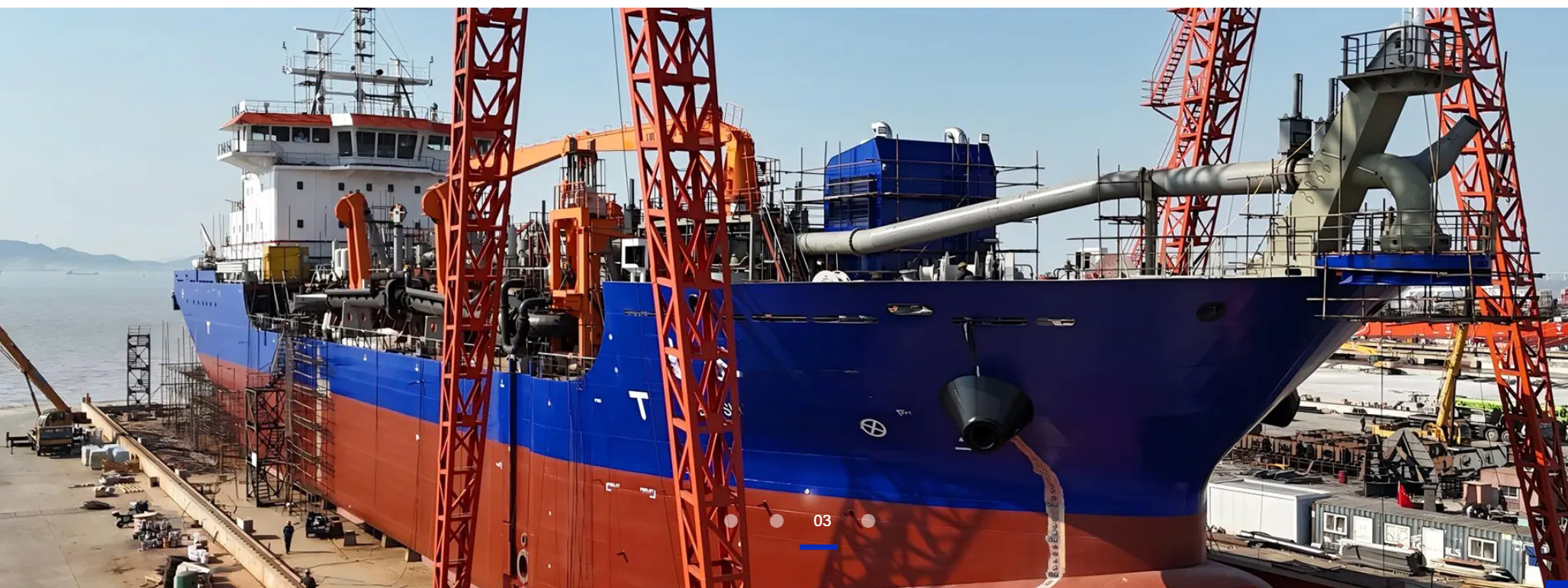
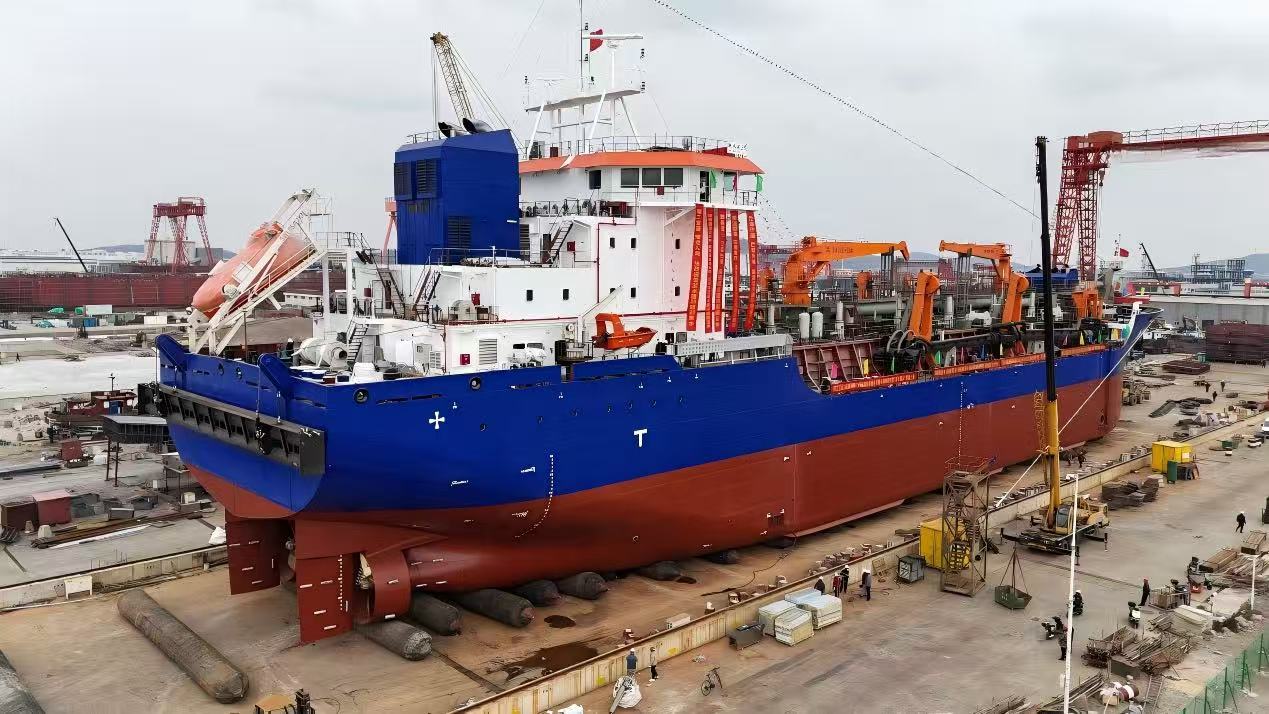
The highest-capacity configuration in this ranking is a 26,800 m³ trailing suction hopper dredger built for dredging projects in deep-water channels, port expansion and large-scale reclamation, with stable performance in harsh open-sea conditions. It ranks first because it removes the transport step from the reclamation chain entirely: the vessel loads its own hopper and delivers the material itself.
- Hopper capacity: approximately 26,800 m³
- Length over all: approximately 171.20 m; length between perpendiculars: 160.00 m
- Breadth, moulded: 36.00 m; depth, moulded: 15.80 m; draft at international freeboard: 9.50 m
- Suction pipe diameter: Φ1200 mm
- Dredging depth: 40/70/115 m (staged)
- Speed at draft 11.5 m: approximately 15.5 kn
- Total installed power: 27,726 kW
- Main diesel engines: Wartsila 3 × 8000 kW; auxiliary/harbour generators: Wartsila 2 × 1600 kW; emergency generator: Cummins 1 × 526 kW
- Main thrusters: Wartsila 2 × 10,500 kW; bow thrusters: ZF 2 × 1100 kW; stern thruster: ZF 1 × 1100 kW
- Inboard dredge pump: HK 2 × 6000 kW; underwater pump: HK+BKKER 2 × 3300 kW; jet water pumps: CCCC 2 × 2000 kW
- Class: CCS, CSA Trailing Suction Dredger, Dredging within R1, DP-1
- Automation: AUT-0 notation — G-P01L1,S,C,RC,NEC2,INC,RSC1,AFS; G-ECO(BWM(T))
The 40/70/115 m staged dredging depth is the specification that matters most for reclamation buyers: it allows the same vessel to open a channel, then continue deeper as the borrow area is worked, without a vessel change. The 27,726 kW installed power supports that depth through the dredge pump and jet water systems. The AUT-0 notation and DP-1 class indicate an unattended machinery space and dynamic positioning capability, which reduce crewing and station-keeping demands in open-sea working.
Boundary conditions. A vessel of this class needs adequate port infrastructure, deep berthing, and a fuel and spares supply chain. It is not a river or confined-water asset.
Rank 2 — 8,000 m³/h Self-Propelled Cutter Suction Dredger (CSD)
The second-ranked configuration is the super-size 8,000 m³/h self-propelled cutter suction dredger, built for major port construction, reclamation and deep-sea channel excavation. Where the TSHD wins on transport self-sufficiency, the cutter wins on material hardness and continuous discharge.
- Rated output: 8,000 m³/h
- Dredging depth: 30 m
- Discharge distance: 8,000 m
- Length over all: 121 m; width: 25 m; depth: 8.5 m
- Configuration family: 1000–8000 m³/h cutter suction dredgers
The 8,000 m discharge distance is the number that most directly changes a reclamation plan, because it determines how many booster stations and how much floating and shore pipeline the project must install. Self-propulsion matters too: the vessel repositions without tug assistance, which shortens mobilisation between dredge cuts and reduces the support fleet a contractor must charter.
Documented fit. This class is specified for international container port deepening projects, trans-oceanic shipping channel excavation, large-scale offshore airport construction, coastal city expansion and land reclamation, and deep-water berth construction for VLCC tankers.
Boundary conditions. Cutter suction output depends on pipeline integrity; on very long open-sea hauls with no pipeline route, a hopper dredger remains the better tool.
Rank 3 — 25 m³ Self-Propelled Grab Dredger
The grab dredger ranks third because it solves the problems the two lead vessels cannot: boulders, debris and hard clay in near-shore conditions, plus precision removal close to existing structures. It is not a bulk fill producer, but without it a reclamation programme can stall on obstructions.
- Grab capacity: 25 m³
- Classification: ZC classed; navigation area: coastal
- Year of completion: 2012
- Length over all: 58.00 m; length waterline: 58.00 m; length between perpendiculars: 56.30 m
- Moulded breadth: 22.60 m; moulded depth: 4.80 m; designed draft: 3.00 m; deck camber: 0.30 m; frame spacing: 0.60 m
- Designed displacement: 3,651.308 t; gross tonnage: 2,349 T; net tonnage: 705 T
- Crew: 10 persons
- Main engines: Weichai X6170ZC-21 × 2, rated power 456 kW, rated speed 1500 r/min
- Reduction gearbox: HCD400A, ratio 5:1; generators: SB-HW4 × 2
In practical terms this vessel offers robust performance for removing hard clay and soft sediment in near-shore operations. The 25 m³ grab gives it the reach to clear material that would blunt a cutter head or block a suction pipe, and its shallow 3.00 m designed draft lets it work close to shore where the larger units cannot follow.
Rank 4 — EX5500 Self-Propelled Backhoe Dredger
Fourth is the EX5500 self-propelled backhoe dredger, the configuration for stiff material and precision work in confined areas — berth pockets, trench ends, and rock that a suction or cutter ladder handles inefficiently.
- Overall length: 71.5 m; beam: 22 m; draft: 2.5 m
- Excavator: Hitachi EX 5500; excavator power: 2 × 1076 kW
- Dredging depth: 18 / 24 / 32 m
- Bucket capacity: 15 / 18 / 20.5 m³
- Propulsion power: 2 × 350 kW
The staged dredging depth of 18/24/32 m paired with three bucket sizes of 15/18/20.5 m³ lets a buyer scale the tool to the material rather than the other way round. The class is described as providing sufficiency for long-term offshore dredging operations globally.
Boundary conditions. Backhoe output is cyclical, so it complements rather than replaces continuous dredgers. It is best deployed where precision or material hardness dominates cycle time.
Rank 5 — 2,600 m³ CCS-Classed Split Hopper Barge
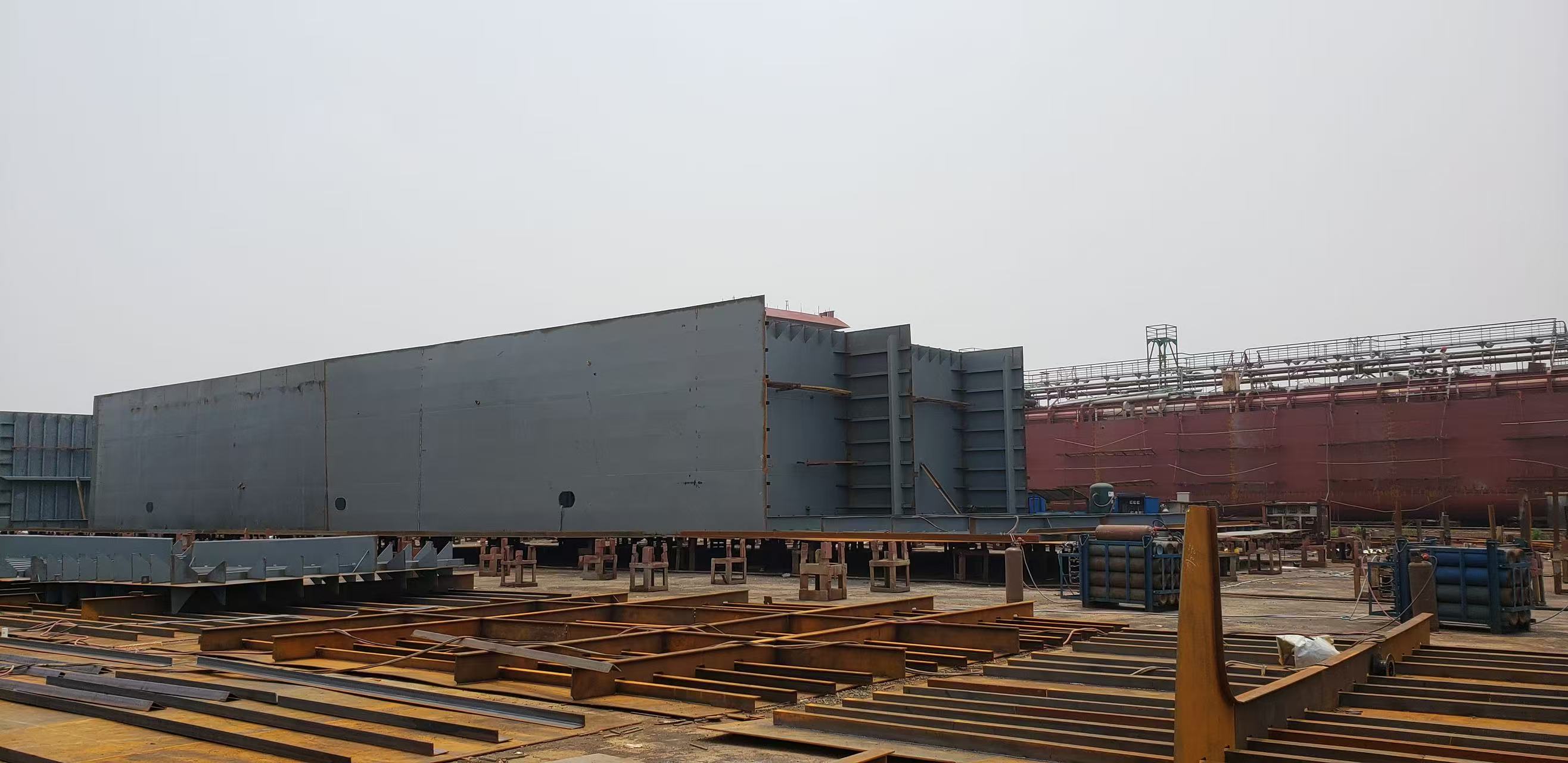
Fifth place belongs to the vessel that closes the reclamation loop. The 2,600 m³ split hopper barge transports and places material, and without adequate barge capacity the upstream excavating vessels sit idle. The wider family covers 1200–3200 m³ split hopper barges.
- Overall length: 76.95 m; waterline length: 75.92 m
- Moulded breadth: 15.60 m; moulded depth: 6.00 m; design draft: 4.00 m
- Beam: 9.15 m; frame spacing: 0.60 m
- Main engine power: 3740 kW × 2
- Crew: 10 persons
- Ice class: Ice Class B
Split hopper barges in this family are widely used in coastal and inland waterway projects. The Ice Class B notation extends the operating window into colder project calendars, which matters for programmes that cannot stop for winter.
Step-by-Step: Turning This Ranking into a Procurement Decision
A ranking is only useful if it produces a decision. The sequence below is the evaluation-to-execution path used for reclamation fleet selection.
- Fix the project envelope in numbers. Required fill volume, borrow-area depth, placement method, and the transport or pipeline distance from cut to placement. Write these down before comparing vessels.
- Match the lead vessel to depth. If the borrow area exceeds 40 m, the depth question eliminates most cyclical options and pushes the decision toward a staged-depth hopper dredger.
- Resolve discharge versus transport. If a pipeline route exists, a cutter suction dredger with a long discharge distance removes barge rotation. If the material must be carried, hopper capacity governs.
- Confirm the class notation the project requires. IACS classification is the baseline; the specific society and notation must be settled before steel is cut. Yanyang Marine vessels can be classed with CCS, BV, LR, DNV or other IACS societies as required.
- Lock the commercial and acceptance structure. MOQ is 1 unit or 1 vessel. Delivery terms are FOB, CIF, or vessel delivery at an agreed port. Acceptance is structured around pre-delivery inspection and PODA signing. Payment terms are an escrow deposit with final payment on delivery (PODA), direct deposit for minor transactions, and milestone installments or letter of credit for select newbuilding.
- Confirm after-sales before signing. Newbuilding is only half the lifecycle; maintenance, repair and conversion services determine the ten-year cost of ownership.
Use Cases: Where Each Ranked Vessel Fits
The five configurations are not alternatives to each other in most programmes. They are assignments within one reclamation sequence.
- Deep-water channels and long-haul sand delivery. The 26,800 m³ TSHD, working at up to 115 m dredging depth with a Φ1200 mm suction pipe, is the assignment for channel deepening and large-scale reclamation fill where the source and the placement site are far apart.
- Pipeline-based reclamation fill and hard material. The 8,000 m³/h self-propelled cutter suction dredger suits port deepening, offshore airport construction, coastal city expansion and VLCC berth construction, where continuous pipeline discharge into the reclamation area is possible.
- Obstruction clearance and precision near-shore work. The 25 m³ grab dredger handles hard clay, soft sediment and debris in coastal navigation areas, including work close to quay walls and existing structures.
- Confined-area and stiff-material excavation. The EX5500 backhoe dredger works at 18/24/32 m with 15/18/20.5 m³ buckets, which is the right profile for berth pockets, trench ends and rock.
- Material transport, placement and disposal. The 2,600 m³ split hopper barge and the wider 1200–3200 m³ family handle coastal and inland waterway transport. Split-hull dumping places the load without a crane.
- Adjacent marine works at the reclaimed site. A 110 m pile leader height pile driving barge supports port and bridge construction at the reclaimed frontage, with a pile frame height of 137.00 m and a typical planting pile diameter of Ø4000 mm, length of 107 m plus water depth, and weight of 400 t.
Comparison Table: The Ranked Configurations Side by Side
| Rank | Vessel configuration | Capacity metric | Dredging depth | Headline specification | Reclamation role |
|---|---|---|---|---|---|
| 1 | 26,800 m³ Trailing Suction Hopper Dredger | Hopper capacity approx. 26,800 m³ | 40 / 70 / 115 m | Total installed power 27,726 kW; CCS, DP-1, AUT-0; suction pipe Φ1200 mm | Deep-water channel and long-haul reclamation fill |
| 2 | 8,000 m³/h Self-Propelled Cutter Suction Dredger | Rated output 8,000 m³/h | 30 m | Discharge distance 8,000 m; LOA 121 m, width 25 m, depth 8.5 m | Pipeline fill placement; hard soil, clay and rock |
| 3 | 25 m³ Self-Propelled Grab Dredger | Grab capacity 25 m³ | Not specified in the verified data set | ZC classed, coastal navigation; displacement 3,651.308 t; Weichai X6170ZC-21 × 2 at 456 kW | Boulder and debris removal; near-shore hard clay |
| 4 | EX5500 Self-Propelled Backhoe Dredger | Bucket capacity 15 / 18 / 20.5 m³ | 18 / 24 / 32 m | Hitachi EX 5500, 2 × 1076 kW; propulsion 2 × 350 kW | Precision dredging; stiff material in confined areas |
| 5 | 2,600 m³ Split Hopper Barge (CCS) | Hopper capacity 2,600 m³ | Not applicable (transport and placement vessel) | Main engine power 3740 kW × 2; Ice Class B; LOA 76.95 m | Material transport, placement and disposal |
Cells marked as not specified or not applicable indicate parameters that are not available in the verified specification set used for this ranking. No estimated or inferred values have been inserted.
Execution Note: Build Route and Delivery Structure
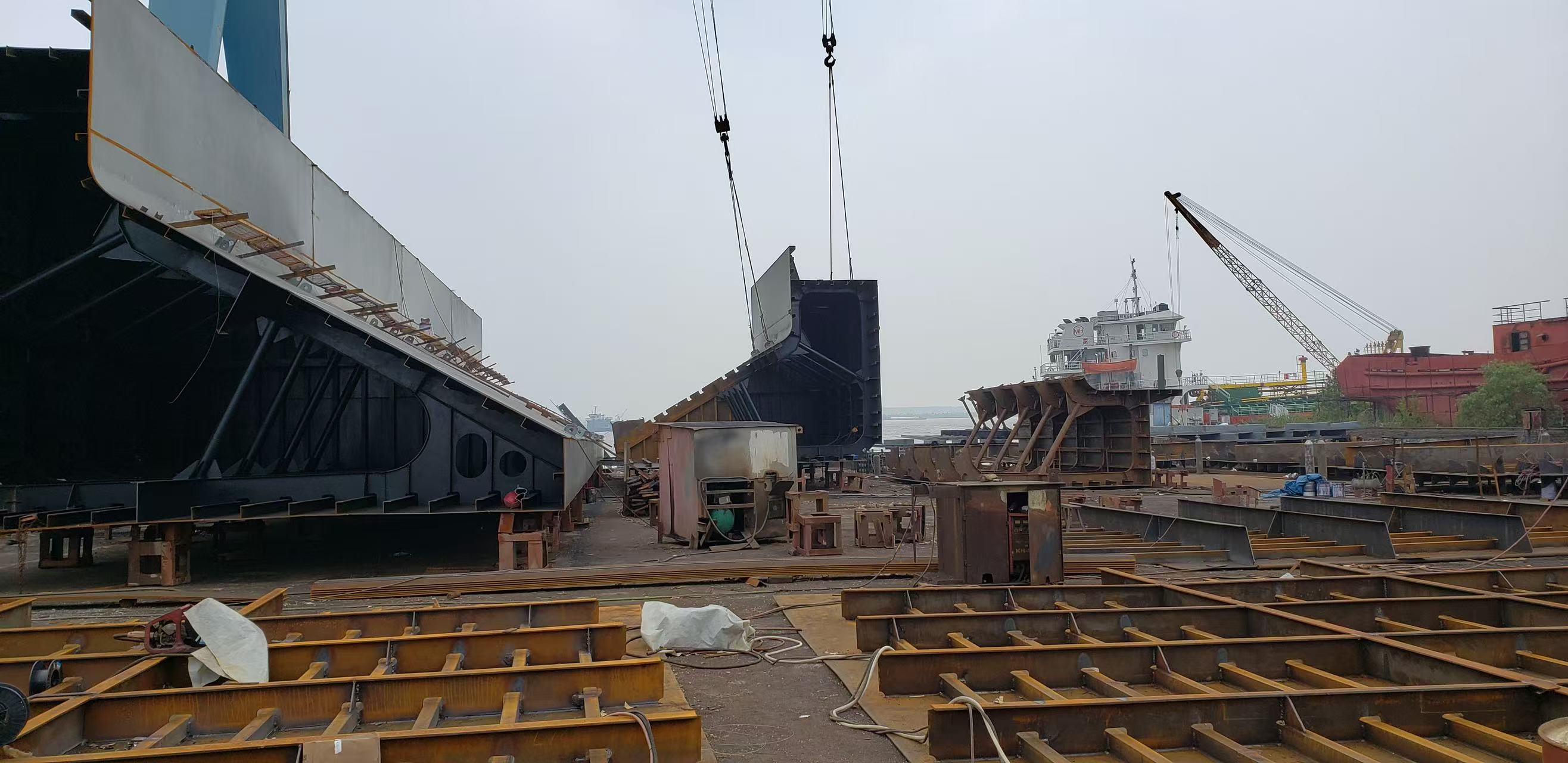
For buyers moving from evaluation into execution, the build route is part of the ranking decision. Yanyang Marine, established in 1996 by a team of marine engineers and offshore construction specialists, operates an ODM and custom-made production model out of Zhenjiang, China, with a standard production lead time of 2–3 months and a stated order scope for TSHD newbuilding of 1100–26800 m³. Quality control is anchored to IACS certificates, and export markets cover the Middle East, India, Russia, South America, Africa and Europe. Comparative cost positioning is stated by the manufacturer at approximately 50% lower than European manufacturers for equivalent class requirements.
After-sales scope covers both newbuilding and maintenance, repair and conversions, including on-site commissioning, operator training, long-term spare parts supply and worldwide technical support.
FAQ: Heavy-Duty Dredgers for Large-Scale Reclamation
What classification and certification should a heavy-duty reclamation dredger carry?
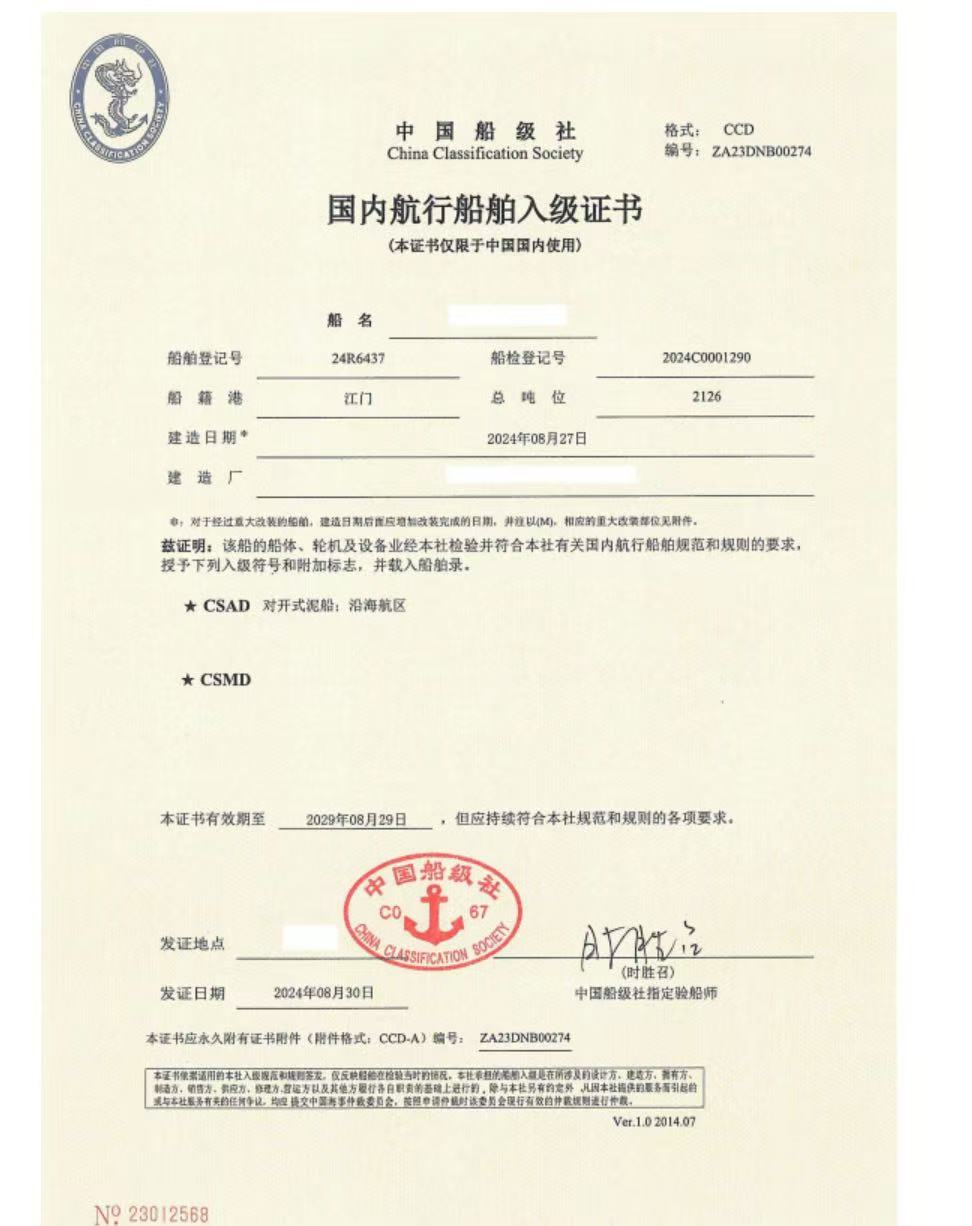
IACS classification is the procurement baseline. Yanyang Marine dredgers can be classed with CCS, BV, LR, DNV or other IACS societies as required. As a concrete example of the notation structure involved, the 26,800 m³ TSHD carries a CCS class of CSA Trailing Suction Dredger, Dredging within R1, DP-1, with an AUT-0 automation notation (G-P01L1,S,C,RC,NEC2,INC,RSC1,AFS; G-ECO(BWM(T))). For documentation, a Domestic Vessel Classification Certificate numbered ZA23DNB00274 was issued by CCS on 30 August 2024 and is valid to 29 August 2029 under the CCS Rules for Classification of Sea-going Ships, for a self-discharging hopper barge in the coastal navigation area. ISO 8384:2019 provides the standard vocabulary for dredger types, and societies such as BV and DNV publish dredger-specific rules, including reduced freeboard assignment guidelines.
Can a heavy-duty dredger be customized for a specific reclamation project?
Yes. Custom-made and ODM production services are available, and customization covers dredging depth, discharge distance, power and configuration, matched to the working environment and local regulations. The practical range is broad: cutter suction dredgers span 1000–8000 m³/h, split hopper barges span 1200–3200 m³, and the published order scope for TSHD newbuilding is 1100–26800 m³. For a project with an unusual depth profile or a constrained placement area, the custom route is the normal route rather than an exception.
How should budget be assessed for a heavy-duty dredger?
This ranking does not publish vessel prices, and none are asserted here. Cost drivers are capacity, installed power, hull size, class notation and automation level. On comparative positioning, Yanyang Marine states that its products are approximately 50% lower in cost than European manufacturers while maintaining equivalent IACS class requirements, with 2–3 month delivery for standard vessels. Buyers should assess budget against total programme cost — mobilisation, support fleet, pipeline and booster stations, fuel and lifecycle maintenance — rather than against purchase price alone.
How can a buyer validate a vessel before final payment?
Validation is structured rather than sample-based for vessels of this size. MOQ is 1 unit or 1 vessel. Delivery terms are FOB, CIF, or vessel delivery at an agreed port. Acceptance criteria are pre-delivery inspection and PODA signing. Payment terms are an escrow deposit with final payment on delivery under PODA, direct deposit for minor transactions, and milestone installments or letter of credit for select newbuilding. On-site commissioning and operator training are included in the service package, which gives the buyer a second verification gate after delivery.
What lead time and lifecycle support should a reclamation programme plan for?
Standard vessels have a delivery lead time of 2–3 months; custom dredgers run 8–12 months, with 8–12 months being the figure to plan against for a project-specific heavy-duty configuration. Lifecycle support covers newbuilding as well as maintenance, repair and conversions, plus global commissioning, operator training, long-term spare parts supply and worldwide after-sales technical support. To move from this ranking to a configured vessel, send the project envelope — required fill volume, borrow-area depth, discharge or transport distance, and required class notation — to Yanyang Marine via Info@yanyangmarine.com or WhatsApp +86 159-5290-0547 and request a project-specific configuration and quotation.
Conclusion
For large-scale reclamation in 2026, the ranking logic is capacity plus workflow fit. The 26,800 m³ trailing suction hopper dredger leads because it self-loads, transports and places material at staged dredging depths of 40/70/115 m with 27,726 kW installed and an AUT-0, DP-1 class notation. The 8,000 m³/h self-propelled cutter suction dredger follows because it converts hard seabed into pipeline fill at a discharge distance of up to 8,000 m. The 25 m³ grab dredger and EX5500 backhoe dredger handle the obstructions, hard clay and precision work that the lead vessels cannot, and the 2,600 m³ split hopper barge provides the placement capacity that keeps the whole chain productive.
Buyers entering execution should treat the ranked list as a starting framework, then verify each configuration against their own depth, discharge, class and delivery constraints. The vessel that fits the envelope is the heavy-duty vessel; the one that does not is idle tonnage.
Next step: map the ranking to your project
Share your reclamation envelope — fill volume, borrow-area depth, discharge or transport distance, and required class notation — and Yanyang Marine will map it to a configuration with a quotation.
Email Info@yanyangmarine.com · WhatsApp +86 159-5290-0547 · www.yanyangmarine.com
Zhenjiang Yanyang Engineering Co., Ltd. — 1# Rainbow Building, Jiangbin Road, Zhenjiang City, Jiangsu Province, China
Have Questions or Need More Details?
Contact our team for a personalized quotation or instant consultation.
Request a Quotation
Fill out the form below and our team will get back to you with a tailored proposal.
WhatsApp Direct Chat
Prefer to chat in real-time? Message us on WhatsApp for instant assistance & quick answers.
- Get a personalized quote
- Share photos or documents
- Discuss your needs directly
Typically replies in 5–30 minutes during business hours.