Grab Dredger vs. Backhoe Dredger: 25 m³ vs. EX5500
Grab Dredger vs. Backhoe Dredger: A 25 m³ Self-Propelled Unit Against the EX5500 for Near-Shore and Offshore Projects
Mechanical dredgers move material with a bucket, not a pump. That single design choice decides which projects they suit: ground that a cutter suction dredger or trailing suction hopper dredger cannot handle efficiently — stiff clay, compacted sediment, debris, boulders — is normally where a grab dredger or a backhoe dredger earns its place on site. Choosing between the two is not a question of which machine is “better.” It is a question of which machine matches your working area, your required dredging depth, and the bucket volume your production plan assumes.
Short answer: a 25 m³ self-propelled grab dredger is a coastal near-shore vessel with a 58.00 m × 22.60 m × 4.80 m hull, a 3.00 m design draft and a ZC-classed coastal navigation notation. The EX5500 self-propelled backhoe dredger is a larger 71.5 m × 22 m hull with a 2.5 m draft, offered with 18 m, 24 m or 32 m dredging depth and 15 m³, 18 m³ or 20.5 m³ bucket options, and is specified for long-term offshore dredging operations globally.
Problem Definition: Why Mechanical Dredgers Split Into Two Distinct Choices
Hydraulic dredgers dominate volume production, but they depend on the material being transportable as a slurry. When the seabed or riverbed contains cohesive clay, dense sand with debris, or obstructions, the practical alternatives are mechanical: a grab dredger working on a wire or hydraulic grab, or a backhoe dredger working on an excavator mounted on a spud-carriage or pontoon.
The two machines differ in ways that show up directly in a project schedule:
- Reach versus control. A backhoe dredger is defined by its dredging depth options — in the EX5500 case, 18 m, 24 m or 32 m. A grab dredger is defined instead by its grab capacity and its hull's working limits, and the 25 m³ unit in this comparison is a coastal vessel rather than a deep-water machine.
- Bucket volume versus cycle time. The 25 m³ grab is the largest single bucket in this pairing. The EX5500 is offered at 15 m³, 18 m³ or 20.5 m³ — smaller buckets, but paired with a 32 m maximum depth capability and two 1076 kW excavator units.
- Mobility and area of operation. Both vessels are self-propelled. The grab dredger carries a coastal navigation area notation; the backhoe dredger is specified for long-term offshore dredging operations globally.
- Hull footprint. The grab dredger is 58.00 m overall with a 3.00 m design draft; the backhoe dredger is 71.5 m overall with a 2.5 m draft. Overall length and draft move in opposite directions here, which matters at shallow berths and in confined working areas.
Buyers who compare only the bucket number — 25 m³ against 20.5 m³ — will reach the wrong conclusion. The correct comparison is bucket volume against dredging depth against navigation area against installed power.
Industry Background: Where Mechanical Dredgers Sit in the 2026 Market
The commercial backdrop explains why this decision is being revisited by more buyers. Grand View Research valued the global dredging equipment market at USD 4.9 billion in 2023 and projects it to reach USD 7.4 billion by 2030. Supply has concentrated in China: according to China General Administration of Customs data reported for HS 890510, China's dredger exports reached USD 462 million in 2024, making it the leading exporter globally.
That concentration matters for evaluation-stage buyers because it widens the shortlist. A project that would once have been specified around a European-built vessel now often has a Chinese-built equivalent in the same class — which is exactly the situation in this comparison. Zhenjiang Yanyang Engineering Co., Ltd., trading as Yanyang Marine, is a Zhenjiang-based manufacturer and exporter of dredgers and dredging vessels founded in 1996, with a stated product portfolio covering cutter suction, trailing suction hopper, backhoe, grab, split hopper barge and pile driving barge types, and a stated export footprint across the United Arab Emirates, Indonesia, India, Egypt, Turkey, Nigeria, South Africa, Tanzania, Saudi Arabia and Oman.
Within that portfolio, the grab dredger and the backhoe dredger occupy separate niches rather than competing for the same berth. Understanding those niches is the whole point of the comparison that follows.
Detailed Solution: The Two Vessels, Specified Side by Side
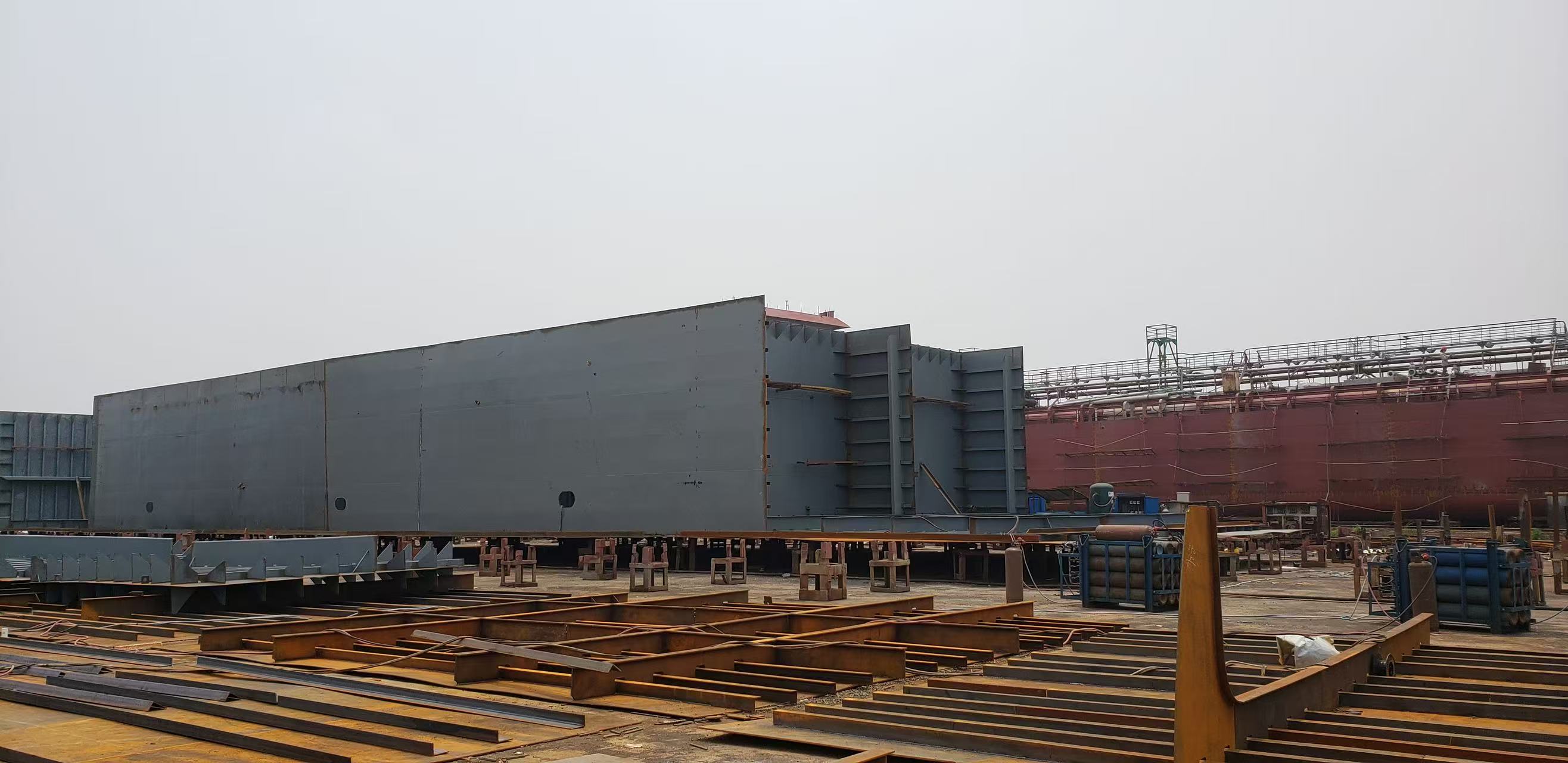
Option A — 25 m³ Self-Propelled Grab Dredger
This is a coastal grab dredger completed in 2012, classed by ZC and specified for removing hard clay and soft sediment in near-shore operations. Its working identity comes from a 25 m³ grab mounted on a hull sized for coastal navigation rather than open-ocean deployment.
Principal Particulars
- Year of completion: 2012
- Overall length: 58.00 m; length waterline: 58.00 m; length between perpendiculars: 56.30 m
- Moulded breadth: 22.60 m; moulded depth: 4.80 m; deck camber: 0.30 m
- Designed draft: 3.00 m
- Navigation area: Coastal
- Grab capacity: 25 m³
- Designed displacement: 3651.308 t; gross tonnage: 2349 T; net tonnage: 705 T
- Crew: 10 persons; frame spacing: 0.60 m
- Main engine: Weichai X6170ZC-21, 2 units, 456 kW rated power, 1500 r/min
- Reduction gearbox: HCD400A, reduction ratio 5:1
- Generators: SB-HW4 × 2
- Classification: ZC
Two rated points deserve attention during evaluation. First, the 456 kW figure is the rated power per main engine, and there are two units — so the installed main propulsion base is 2 × 456 kW, not 456 kW total. Second, the 2349 T gross tonnage against a 3.00 m design draft tells you this hull is wide and shallow: a 22.60 m beam on a 58.00 m length is a stable working platform, but it also means the vessel is not configured for long open-sea transits.
The 25 m³ grab is the defining production asset. A single bucket of that size, worked on a coastal hull with ten crew, suits a repetitive cycle in a defined near-shore area — harbour basins, berth pockets, channel edges, and coastal maintenance work where the ground will not pump.
Option B — EX5500 Self-Propelled Backhoe Dredger
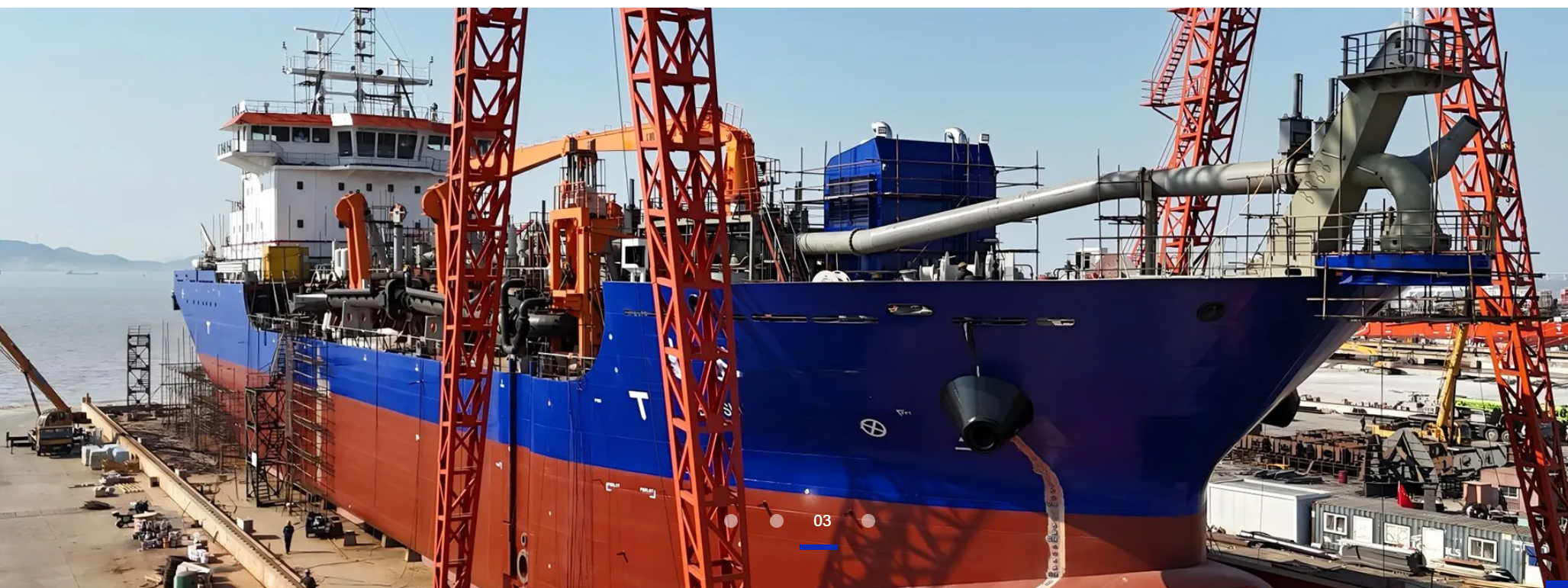
The EX5500 is a self-propelled backhoe dredger built around Hitachi EX 5500 excavator units. Where the grab dredger is defined by one bucket size, this vessel is offered as a configurable depth-and-volume combination.
Principal Particulars
- Overall length: 71.5 m; beam: 22 m; draft: 2.5 m
- Excavator model: Hitachi EX 5500
- Excavator power: 2 × 1076 kW (2152 kW combined)
- Dredging depth options: 18 m / 24 m / 32 m
- Capacity options: 15 m³ / 18 m³ / 20.5 m³
- Propulsion power: 2 × 350 kW
- Stated application: long-term offshore dredging operations globally
The depth-and-capacity ladder is the key commercial feature. A buyer can specify 18 m with 15 m³, step up to 24 m with 18 m³, or take the full 32 m configuration with a 20.5 m³ bucket. In practice this means the vessel can be matched to a project's deepest required cut at the point of order rather than accepting a fixed capability.
Installed power is decisively higher than the grab dredger's: two excavator units at 1076 kW each total 2152 kW, plus 2 × 350 kW of propulsion. That is a different class of energy demand, with corresponding implications for fuel logistics, spare-parts planning and crew competence — you are operating heavy excavator machinery, not a winch-and-grab arrangement.
Note the draft figure: 2.5 m on a 71.5 m hull. The EX5500 draws less than the grab dredger's 3.00 m design draft despite being 13.5 m longer overall. For projects working from shallow access channels or over shallow berth areas, that is a meaningful operational difference.
Comparison Table: Grab Dredger vs. EX5500 Backhoe Dredger
| Parameter | 25 m³ Self-Propelled Grab Dredger | EX5500 Self-Propelled Backhoe Dredger |
|---|---|---|
| Overall length | 58.00 m | 71.5 m |
| Beam / moulded breadth | 22.60 m | 22 m |
| Moulded depth | 4.80 m | — |
| Draft | 3.00 m (designed) | 2.5 m |
| Bucket / grab capacity | 25 m³ | 15 m³ / 18 m³ / 20.5 m³ |
| Dredging depth | Not stated in the particulars | 18 m / 24 m / 32 m |
| Main power | Weichai X6170ZC-21, 2 × 456 kW at 1500 r/min | Hitachi EX 5500, 2 × 1076 kW (2152 kW) |
| Propulsion power | Via main engines and HCD400A gearbox (5:1) | 2 × 350 kW |
| Gross tonnage | 2349 T (net 705 T) | — |
| Designed displacement | 3651.308 t | — |
| Crew | 10 persons | — |
| Navigation area / application | Coastal; hard clay and soft sediment in near-shore operations | Long-term offshore dredging operations globally |
| Classification | ZC | — |
| Year of completion | 2012 | — |
Step-by-Step Breakdown: How to Decide Between Them
The decision resolves in a fixed order. Work through these six steps before you shortlist either vessel type.
Step 1 — Fix your maximum required dredging depth
This is the fastest filter. The EX5500 is offered at 18 m, 24 m or 32 m, so any project demanding a cut deeper than roughly 18 m at the working face falls naturally toward the backhoe. The 25 m³ grab dredger's particulars do not state a dredging depth, so if a grab dredger is your preference, depth becomes a mandatory RFQ question rather than an assumption.
Step 2 — Match bucket volume to your production plan, not to the biggest number
The 25 m³ grab is larger per cycle than any EX5500 bucket option. But cycle time, swing angle, hoist distance and repositioning determine output, and a 20.5 m³ bucket on a 32 m reach works a very different cycle from a 25 m³ grab in a berth pocket. Ask both suppliers for the assumed cycle time behind any production figure they quote.
Step 3 — Check the navigation area against your site
The grab dredger carries a coastal navigation area notation and is specified for near-shore work. The EX5500 is specified for long-term offshore dredging operations globally. If your site is a harbour basin or a coastal maintenance area, the grab dredger's coastal configuration is aligned. If your programme is offshore and long-duration, the backhoe's stated application scope is the closer match.
Step 4 — Verify draft and overall length against your access route
Draft: 3.00 m (grab) versus 2.5 m (backhoe). Length: 58.00 m versus 71.5 m. A shallower draft helps over shallow berths and access channels; a shorter overall length helps in confined basins and tighter turning areas. Check both against your actual site survey before committing.
Step 5 — Confirm installed power and the operating cost that follows
The two power architectures are not comparable line for line. The grab dredger runs two Weichai X6170ZC-21 main engines at 456 kW each through an HCD400A gearbox with a 5:1 reduction ratio. The backhoe runs two Hitachi EX 5500 excavator units at 1076 kW each — 2152 kW combined — plus 2 × 350 kW of propulsion. Higher installed power changes fuel burn, spare-parts inventory, maintenance intervals and technician skill requirements. Model those costs before comparing headline capability.
Step 6 — Confirm classification and documentation
Classification claims must be evidenced by the certificate, not by the brochure. The 25 m³ grab dredger is ZC-classed. For any other vessel, request the class certificate and get the issuing society confirmed in writing. Yanyang Marine states that its dredgers can be classed by IACS societies including CCS, BV, LR and DNV as required — and the company holds a CCS Domestic Vessel Classification Certificate, number ZA23DNB00274, issued 30 August 2024 and valid until 29 August 2029, covering a self-discharging hopper barge under the CCS Rules for Classification of Sea-going Ships, for a coastal navigation area.
Evaluation note: a class certificate is vessel-specific. A builder holding a valid CCS certificate for one vessel type does not automatically mean a different vessel carries the same notation. Always match the certificate number to the hull you are buying.
Use Cases: Which Vessel Fits Which Project
Where the 25 m³ grab dredger fits
- Port and harbour basin cleaning. A 22.60 m beam gives a stable platform for repetitive grab cycles in a defined coastal area.
- Near-shore channel edge and berth pocket work. Coastal navigation notation is matched to sheltered, defined working areas.
- Hard clay and soft sediment removal. The stated application for this vessel is exactly this material range, where pump-based dredgers struggle.
- Small-crew operations. Ten persons is a modest complement for a 2349 GT vessel.
Where the EX5500 backhoe dredger fits
- Deep cuts to 32 m. The 32 m depth option with a 20.5 m³ bucket is the deepest configuration in this comparison.
- Long-term offshore programmes. The vessel is specified for offshore dredging operations globally over extended durations.
- Projects requiring a matched depth-and-volume specification. Three depth options paired with three bucket sizes allow the vessel to be configured at order rather than adapted later.
- Precision excavation in stiff material. Excavator-based digging gives direct bucket control at the working face.
- Shallow-draft access with large hull volume. A 2.5 m draft on a 71.5 m hull suits sites where access depth is the binding constraint.
Frequently Asked Questions
Are both vessels class-certified, and what documentation should a buyer request?
The 25 m³ self-propelled grab dredger is ZC-classed. Classification for the EX5500 backhoe dredger is not stated in the supplied particulars, so it must be confirmed in the RFQ response. Buyers should request the class certificate itself — including certificate number, issuing society, scope of notation, issue date and expiry date — rather than accepting a general statement that vessels “can be classed.” For reference, Yanyang Marine's CCS Domestic Vessel Classification Certificate ZA23DNB00274 was issued on 30 August 2024 and is valid until 29 August 2029, covering a self-discharging hopper barge for a coastal navigation area under the CCS Rules for Classification of Sea-going Ships. Because a certificate applies to a specific vessel, the number must be matched to the hull being purchased.
Can the EX5500 backhoe dredger reach deeper than the grab dredger?
On the stated particulars, yes. The EX5500 is offered with dredging depth options of 18 m, 24 m and 32 m. The 25 m³ grab dredger's particulars do not state a dredging depth, and the vessel is specified for near-shore coastal operations rather than deep-water work. For any project where the required cut exceeds roughly 18 m, the backhoe configuration should be assessed first, and the grab dredger should only be considered after its actual working depth has been confirmed in writing by the supplier.
Which vessel costs more to operate, and what drives the difference?
Operating cost follows installed power and machinery type. The EX5500 runs two Hitachi EX 5500 excavator units at 1076 kW each — 2152 kW combined — plus 2 × 350 kW of propulsion. The grab dredger runs two Weichai X6170ZC-21 main engines at 456 kW each at 1500 r/min through an HCD400A gearbox with a 5:1 reduction ratio. The backhoe therefore carries substantially higher installed power, with corresponding effects on fuel consumption, spare-parts inventory and technician requirements. A like-for-like cost comparison must be built on your own fuel price, utilisation hours and maintenance regime; published unit prices for either vessel type are not available and should not be assumed.
Can a buyer inspect the vessel or obtain documentation before committing?
Yes — inspection and document review are the normal route. Request the vessel particulars, the class certificate, machinery records and the main engine and gearbox documentation, and arrange a physical or video inspection of the hull and the grab or excavator assembly. Yanyang Marine states that it provides on-site commissioning and operator training as part of its delivery package, which gives a buyer a further point to verify during evaluation. Buyers should also confirm the vessel's current condition and survey status independently rather than relying on the listing alone.
What lead time should a project plan for?
Yanyang Marine states 2–3 months for standard vessels and 8–12 months for custom dredgers. The 25 m³ grab dredger in this comparison was completed in 2012, so it is a built vessel rather than a newbuild — availability is confirmed per unit rather than by a production schedule. The EX5500 backhoe dredger, by contrast, is offered across three depth and three bucket configurations, which makes it a specification-at-order item. For project planning, treat the 8–12 month custom window as the realistic baseline whenever a non-standard depth or bucket configuration is required, and confirm the schedule against your project's critical path before fixing a mobilisation date.
Next Step: Match the Vessel to Your Site Data
Send your required dredging depth, working area, ground conditions and target output, and Yanyang Marine will confirm which configuration applies — grab or backhoe — and provide the matching specification sheet and quotation.
Email: Info@yanyangmarine.com · Tel / WhatsApp: +86 159-5290-0547 · www.yanyangmarine.com
Conclusion
The grab dredger and the backhoe dredger are not interchangeable options on the same shortlist. They are answers to different project questions.
Choose the 25 m³ self-propelled grab dredger when the work is coastal and near-shore, when a single large bucket of 25 m³ suits the material, and when a 58.00 m × 22.60 m × 4.80 m hull on a 3.00 m design draft with a ten-person crew and a ZC coastal notation matches your site. It is a purpose-built coastal platform specified for hard clay and soft sediment removal.
Choose the EX5500 self-propelled backhoe dredger when the dredging depth requirement reaches 18 m, 24 m or 32 m, when you need a configured bucket size of 15 m³, 18 m³ or 20.5 m³, when a 71.5 m hull with a 2.5 m draft suits your access route, and when the programme is long-term offshore work rather than a defined coastal campaign. Its 2152 kW of excavator power and 2 × 350 kW of propulsion place it in a different operating class.
Whichever way the decision falls, resolve three items in writing before order: the class certificate matched to the specific hull, the actual achievable dredging depth under your site conditions, and the production cycle assumption behind any output figure. Everything else in this comparison follows from those three.
Have Questions or Need More Details?
Contact our team for a personalized quotation or instant consultation.
Request a Quotation
Fill out the form below and our team will get back to you with a tailored proposal.
WhatsApp Direct Chat
Prefer to chat in real-time? Message us on WhatsApp for instant assistance & quick answers.
- Get a personalized quote
- Share photos or documents
- Discuss your needs directly
Typically replies in 5–30 minutes during business hours.