Supplier Evaluation: How to Verify Builder Experience With Completion and Class Records
Builder experience becomes verifiable the moment a buyer asks for records instead of brochures. A class certificate, a completion year, a gross tonnage figure and a main engine specification are four independent pieces of evidence that can be traced, compared and written into a contract before any deposit is paid.
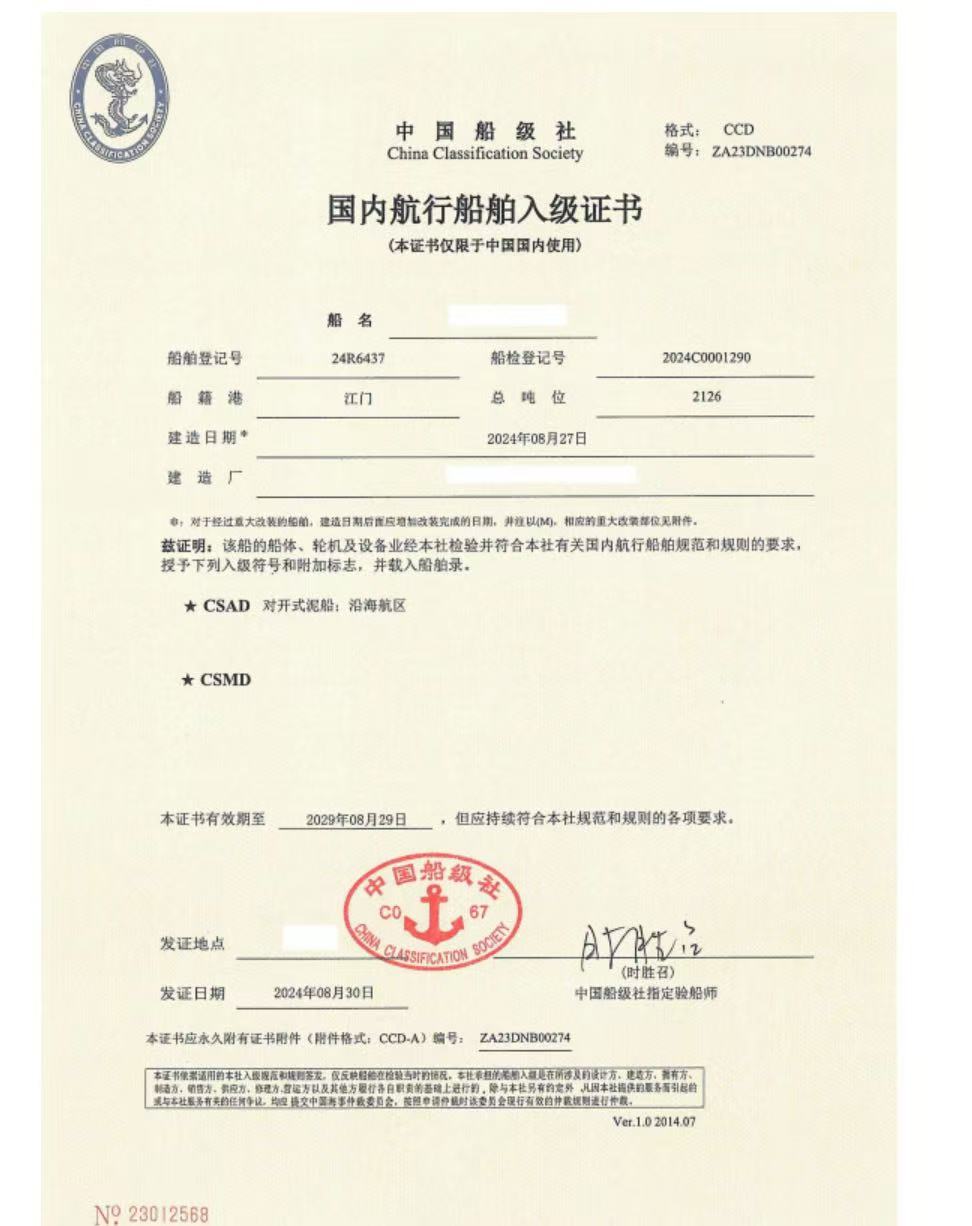
Take three concrete records as the benchmark for this article. A 25 m³ self-propelled grab dredger was completed in 2012 with a gross tonnage of 2,349 T and is powered by two Weichai X6170ZC-21 main engines. A domestic vessel classification certificate numbered ZA23DNB00274 was issued by CCS on 30 August 2024 for a self-discharging hopper barge and remains valid until 29 August 2029. A 26,800 m³ trailing suction hopper dredger lists a total installed power of 27,726 kW delivered through Wartsila main engines and thrusters. Each of these is a checkable fact rather than a claim, and each one tells a buyer something different about the supplier behind it.
This article sets out a document-based evaluation framework for dredging equipment procurement. It explains what to request, what each document actually proves, which attributes must be cross-checked against each other, and how the findings convert into acceptance terms and payment triggers.
Problem Definition: Why “We Build Dredgers” Is Not Evidence of Experience
The most common failure in supplier evaluation is treating category coverage as proof of capability. A supplier that lists cutter suction dredgers, trailing suction hopper dredgers, grab dredgers and backhoe dredgers has demonstrated a product catalogue, not a delivery history. Those are two different things, and only one of them reduces procurement risk.
Dredging equipment buyers face three specific verification gaps:
- The issuer gap. A supplier describing its own vessels as classed is a self-declaration. Only the classification society can confirm that a certificate exists, covers the vessel in question and remains valid. The issuer of record is the evidence, not the description of it.
- The vessel-level gap. Experience lives at the level of individual vessels. Completion year, gross tonnage, net tonnage, principal dimensions, displacement and engine make and model are attributes of a specific hull. Without them, a supplier's portfolio cannot be compared with a project requirement or with a competing offer.
- The delivery gap. A completed vessel had to be accepted by someone. Pre-delivery inspection records and signed delivery documentation show that a build was finished to an agreed specification, not merely started.
For context on the supplier in this article: Zhenjiang Yanyang Engineering Co., Ltd., trading as Yanyang Marine, is a Chinese manufacturer and exporter of dredgers and dredging vessels based in Zhenjiang, Jiangsu Province, established in 1996. Its listed product range covers cutter suction dredgers, trailing suction hopper dredgers, split hopper barges, grab dredgers, backhoe dredgers and pile driving barges. That range is a starting point for shortlisting, not a conclusion — the records below are what convert it into an evaluation.
Industry Background: Why Documentary Scrutiny Has Become Standard
Two structural facts explain why buyers no longer rely on reputation alone when sourcing dredging equipment.
First, supply has concentrated. China's exports of dredgers under HS 890510 reached USD 462 million in 2024, making it the leading exporter globally according to customs trade data. When a large share of new and used dredging capacity originates from one manufacturing base, the practical question for buyers shifts from “which country” to “which yard, and how do I prove it.”
Second, the category is expanding. Grand View Research valued the global dredging equipment market at USD 4.9 billion in 2023 and projected it to reach USD 7.4 billion by 2030. Growth of that kind attracts trading companies and intermediaries alongside actual shipyards, which is precisely why documentation matters more than presentation.
Classification is the mechanism that makes verification possible. Yanyang Marine's vessels can be classed by IACS societies including CCS, BV, LR and DNV, depending on the requirement. Tender documents normally name the society that must issue the certificate — ABS, CCS, BV, LR or DNV, all of which are IACS members — and that naming is binding. A certificate from a different body, or a supplier statement that a vessel “is classed,” does not satisfy a specification that names a specific society.
Detailed Solution: The Four-Document Evidence Pack
A credible supplier evaluation can be carried out with four documents. Each answers a different question, and together they close the three gaps described above.
1. The Classification Certificate — Who Independently Confirmed the Vessel
Request the certificate itself, not a summary of it. The document must state the certificate number, the issuing society, the issue date, the expiry date, the vessel type and scope, and the classification standard applied.
The recorded example in this article is certificate ZA23DNB00274, a Domestic Vessel Classification Certificate issued by CCS on 30 August 2024 and valid until 29 August 2029. Its scope is a coastal navigation area self-discharging hopper barge, and it was issued under the CCS Rules for Classification of Sea-going Ships. Four things in that sentence are checkable: the number, the society, the vessel-type scope and the validity window.
The scope clause is the part buyers most often skip. A certificate covering a self-discharging hopper barge in a coastal navigation area does not extend to a trailing suction hopper dredger, and it does not extend to unlimited service. Matching the scope to the project is the real test.
2. The Vessel Particulars Sheet — When It Was Completed and How Big It Is
The particulars sheet should include completion year, gross tonnage, net tonnage, length overall, moulded breadth, moulded depth, design draft and deadweight or displacement. These are the attributes that allow one hull to be compared with another and with a project requirement.
The 25 m³ self-propelled grab dredger is a useful reference because its particulars are complete enough to be audited. It was completed in 2012, with a gross tonnage of 2,349 T and a net tonnage of 705 T. Length overall is 58.00 m, moulded breadth 22.60 m, moulded depth 4.80 m, design draft 3.00 m and designed displacement 3,651.308 t. Grab capacity is 25 m³, the navigation area is coastal, and the vessel is described as ZC classed, with a crew of 10 persons and a frame spacing of 0.60 m.
3. The Main Propulsion and Equipment Schedule — Whether the Machinery Matches the Claim
Prime mover quality is where nominal specifications and actual builds most often diverge. A buyer should require the engine make, model, quantity, rated power, rated speed, gearbox model and reduction ratio, and cross-check each against the vessel that was delivered.
On the 25 m³ grab dredger, the record is specific. Two Weichai X6170ZC-21 main engines are installed, each rated at 456 kW at 1,500 r/min, driving through HCD400A reduction gearboxes with a 5:1 reduction ratio. Twin SB-HW4 generators are listed alongside them. At the larger end of the range, the 26,800 m³ trailing suction hopper dredger lists Wartsila 3 × 8,000 kW main diesel engines, Wartsila 2 × 1,600 kW auxiliary and harbour generators, a Cummins 1 × 526 kW emergency generator, Wartsila 2 × 10,500 kW main thrusters, HK 2 × 6,000 kW inboard dredge pumps, HK+BKKER 2 × 3,300 kW underwater pumps, CCCC 2 × 2,000 kW jet water pumps and ZF bow and stern thrusters, for a total installed power of 27,726 kW.
Engine branding matters because it is hard to fake at the point of delivery. A gearbox model and a reduction ratio are equally resistant to substitution, and both appear on the machinery nameplate that a buyer's inspector can photograph.
4. Acceptance and Delivery Records — Whether Anyone Accepted the Result
Completion is a date; acceptance is a transaction. The standard acceptance route recorded for this supplier is pre-delivery inspection followed by signing of the Protocol of Delivery and Acceptance (PODA). Payment terms follow the same logic: an escrow deposit with final payment on delivery against the PODA, direct deposit for minor transactions, and milestone instalments or a letter of credit for selected newbuilding work. Minimum order quantity is one unit or one vessel, and delivery terms are FOB, CIF or vessel delivery at an agreed port.
These terms matter to the evaluation because they determine whether the documentary evidence has any commercial consequence. A certificate that is never checked at delivery is a file, not a control.
Step-by-Step: Running the Verification
Step 1 — Confirm the Issuing Society Before Reading the Certificate
Start with the tender requirement. Identify which society the project specification names, then check that the certificate's issuer matches it. Record the certificate number, issue date and expiry date in the evaluation file. Using ZA23DNB00274 as the pattern: issuer CCS, issued 30 August 2024, valid to 29 August 2029. A certificate that expires before the project's mobilisation window is a risk item regardless of how strong the vessel otherwise looks.
Step 2 — Match the Certificate Scope to the Vessel Type and Trade Area
Read the scope line. Coastal navigation area and self-discharging hopper barge are scope limitations, and they must match the intended service. If a project requires a dredger operating beyond the scope written on the certificate, the gap has to be resolved before contract, not after delivery.
Step 3 — Cross-Check Gross Tonnage Against Principal Dimensions
Gross tonnage, length, breadth and depth should be internally consistent for the stated vessel type. The grab dredger record is a good calibration point: 2,349 T gross tonnage, 705 T net tonnage, 58.00 m length overall, 22.60 m moulded breadth, 4.80 m moulded depth and 3.00 m design draft for a 25 m³ grab capacity vessel with a designed displacement of 3,651.308 t. If a supplier's numbers do not reconcile at this level of detail, the particulars sheet has not been audited.
Step 4 — Evaluate the Completion Year as an Operating Signal
Completion year tells a buyer what generation of vessel they are looking at. A 2012 completion means the hull has an operating history, and it also means the buyer should ask about maintenance records, refit history and the current condition survey. It is not automatically a negative: an older hull with documented maintenance and a valid certificate can be a rational acquisition, particularly for coastal work. The point is that the year must be stated, not inferred.
Step 5 — Verify the Prime Mover and Drive Train Line by Line
Ask for the machinery schedule and compare it against the nameplates. Two 456 kW Weichai X6170ZC-21 engines at 1,500 r/min with HCD400A gearboxes at 5:1 is a specification that can be physically confirmed. On a larger vessel, an installed power figure of 27,726 kW should be traceable to the individual Wartsila, Cummins, HK, BKKER, CCCC and ZF items that compose it. Where a supplier quotes a single total power figure with no component breakdown, request the breakdown before proceeding.
Step 6 — Tie the Evidence to Delivery Capability and Lead Time
The last step connects the vessel record to the supplier's ability to repeat it. Yanyang Marine reports more than 30 large dredger construction projects delivered, an organisation of 50 employees with a 10-person R&D team, and a standard production lead time of 2–3 months for standard vessels against 8–12 months for custom units. Custom-made and ODM production services are offered, which matters where a project requires configuration changes rather than a stock vessel.
Use Cases: Where the Evidence Pack Changes the Decision
Port construction and channel dredging. Projects of this type normally specify the classification society in the tender. The verification task is scope matching: confirm that the certificate covers the vessel type and the operating area named in the specification, and that its validity extends past the project period.
Coastal and inland desilting. For near-shore work removing hard clay and soft sediment, a grab dredger with a documented completion year and grab capacity of 25 m³ provides a traceable reference point. Buyers can compare a quoted vessel against a vessel that already exists in the record.
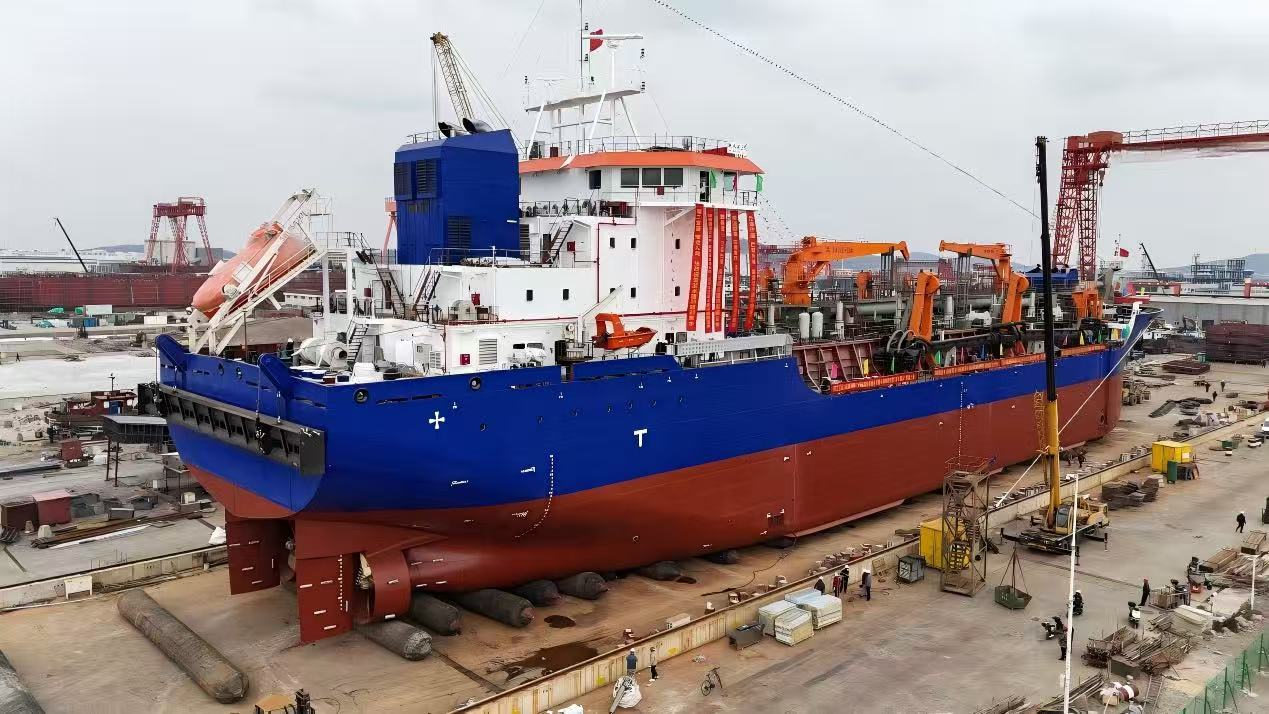
Large-scale reclamation and deep-water work. Where hopper capacity and dredging depth dominate the specification, the 26,800 m³ trailing suction hopper dredger with a 40/70/115 m digging depth, a Φ1200 mm suction pipe diameter and CCS, CSA Trailing Suction Dredger, R1 and DP-1 classification shows the level of detail a compliant offer should contain.
Offshore wind and marine construction support. Pile driving barges and floating crane assets are evaluated the same way: stated principal dimensions, stated equipment, and a certificate whose scope matches the intended operation.
Comparison Table: Verifiable Attributes Across Three Documented Vessels
The table below uses only attributes that appear in the supplier's vessel records. Blank cells are shown as “not stated” deliberately — they indicate what a buyer must request before an offer can be evaluated.
| Attribute | 25 m³ Grab Dredger | 26,800 m³ TSHD | 2,600 m³ Split Hopper Barge |
|---|---|---|---|
| Completion / record anchor | Completed 2012 | Not stated — request build and delivery record | Class certificate ZA23DNB00274, issued 30 Aug 2024 |
| Gross tonnage | 2,349 T | Not stated | Not stated |
| Length overall × moulded breadth | 58.00 m × 22.60 m | 171.20 m × 36.00 m | 76.95 m × 15.60 m |
| Moulded depth | 4.80 m | 15.80 m | 6.00 m |
| Main propulsion / power | Weichai X6170ZC-21 × 2, 456 kW at 1,500 r/min | Wartsila 3 × 8,000 kW main engines; 2 × 10,500 kW main thrusters; 27,726 kW installed | Main engine power 3,740 kW × 2 |
| Class / certificate status | Described as ZC classed | CCS, CSA Trailing Suction Dredger, R1, DP-1; AUT-0 | CCS domestic classification; coastal navigation area |
| Operating capability | Grab capacity 25 m³; designed displacement 3,651.308 t | Hopper approx. 26,800 m³; dredging depth 40/70/115 m; suction pipe Φ1200 mm | 2,600 m³ split hopper; Ice Class B |
The practical lesson from the table is that completeness varies by vessel. A buyer who receives a particulars sheet with every field populated can evaluate quickly; a buyer who receives a single total power figure cannot. The gaps are as informative as the entries.
Frequently Asked Questions
What class certification should a dredger actually hold, and how does a buyer verify it?
The certificate must be issued by the society named in the project specification, and it must name the vessel type and operating scope that match the intended service. Verification means checking four fields directly on the document: certificate number, issuing society, issue date and expiry date. A worked example is certificate ZA23DNB00274, issued by CCS on 30 August 2024 and valid until 29 August 2029, covering a self-discharging hopper barge in a coastal navigation area under the CCS Rules for Classification of Sea-going Ships. Note that this scope covers that vessel type and area only — it does not extend to other dredger types or unrestricted service, and a buyer should not treat one certificate as evidence for an entire fleet.
What do gross tonnage and main engine specifications actually tell a buyer about a builder?
They show whether a yard has built and documented a hull of a specific size with a specific machinery fit. A completed 25 m³ grab dredger with 2,349 T gross tonnage, 58.00 m length overall and 22.60 m moulded breadth, powered by two Weichai X6170ZC-21 engines rated 456 kW at 1,500 r/min through HCD400A gearboxes at 5:1, is a verifiable build rather than a capability statement. At the upper end, a 26,800 m³ trailing suction hopper dredger with 27,726 kW total installed power and a component schedule listing Wartsila main engines, Wartsila thrusters and HK/BKKER dredge pumps demonstrates the scale of system integration the supplier has documented. The evidence value comes from matching each stated component against the nameplate at inspection.
How do these records affect the commercial terms and budget structure?
The records determine the payment structure rather than the other way around. The recorded terms are a minimum order quantity of one unit or one vessel, delivery terms of FOB, CIF or vessel delivery at an agreed port, and payment by escrow deposit with final payment on delivery against the PODA, direct deposit for minor transactions, or milestone instalments and letters of credit for selected newbuilding work. On cost positioning, the supplier describes its pricing as approximately 50% lower than European manufacturers, which is a company-reported comparison rather than an independently audited one and should be tested against a specific technical specification and quotation. Standard vessels carry a 2–3 month production lead time, while custom units run 8–12 months.
Can a buyer inspect a vessel before delivery and before releasing final payment?
Yes — pre-delivery inspection is the recorded acceptance route, followed by signing of the Protocol of Delivery and Acceptance. The inspection is also the moment to close the documentary loop: confirm that the machinery nameplates match the schedule, that the gross tonnage and principal dimensions match the particulars sheet, and that the class certificate is valid and in scope. Because final payment is tied to the PODA under the recorded terms, the inspection carries commercial weight rather than being a courtesy visit. Buyers should schedule it early enough that any discrepancy can still be corrected within the build programme.
How long does verification take, and how does lead time interact with it?
Document verification runs in parallel with technical and commercial evaluation, and it should be sequenced so that certificate and particulars checks are complete before a deposit is committed. Lead time then sets the real project calendar: standard vessels are quoted at 2–3 months for delivery, while custom-built units require 8–12 months. Custom-made and ODM production services are available where the project needs configuration changes in dredging depth, discharge distance or power arrangement, and the longer window should be planned into the project schedule rather than treated as slippage. Buyers who want to begin with a document review and a quotation can request both through Yanyang Marine at Info@yanyangmarine.com or +86 159-5290-0547.
Conclusion: Evidence Beats Presentation
A dredging equipment supplier's experience is not a matter of impression. It is a set of documents that can be read, cross-checked and written into acceptance terms. The four-document pack — class certificate, vessel particulars, machinery schedule and acceptance record — converts an unverifiable claim into a decision-grade file.
The reference records in this article show what adequate evidence looks like at each level. A 2012-completed 25 m³ grab dredger with 2,349 T gross tonnage and two Weichai X6170ZC-21 engines demonstrates hull-level traceability. Certificate ZA23DNB00274, issued by CCS in August 2024 and valid to August 2029, demonstrates independent confirmation with a defined scope. The 26,800 m³ trailing suction hopper dredger with 27,726 kW installed power and CCS, CSA, R1 and DP-1 classification demonstrates the detail expected in a large-project offer.
For buyers at the evaluation-to-execution stage, the sequence is straightforward: request the records, verify the issuer, match the scope, reconcile the numbers, and only then commit to a deposit. Where the records check out, the remaining work is specification and schedule — and that is the point at which a supplier conversation becomes productive.
Next Step
Buyers evaluating dredging equipment can request the vessel particulars, classification documentation and a quotation for standard or custom-built units directly from Yanyang Marine. A 25 m³ grab dredger, 2,600 m³ split hopper barge and 26,800 m³ trailing suction hopper dredger record set is available for review as a starting reference.
Email: Info@yanyangmarine.com | WhatsApp: +86 159-5290-0547 | www.yanyangmarine.com
Have Questions or Need More Details?
Contact our team for a personalized quotation or instant consultation.
Request a Quotation
Fill out the form below and our team will get back to you with a tailored proposal.
WhatsApp Direct Chat
Prefer to chat in real-time? Message us on WhatsApp for instant assistance & quick answers.
- Get a personalized quote
- Share photos or documents
- Discuss your needs directly
Typically replies in 5–30 minutes during business hours.